Land Policy in Practice: A Tale of Two Dutch Cities 

How does a municipality regain control of its land? Many local politicians struggle with this question. In the Netherlands, where there has been a spiralling housing crisis over the past decades, two aldermen have been trying to address the issue through active land policies and expanding municipal land ownership. An interview with Martijn Balster of The Hague and Rik Thijs of Eindhoven.  

Why is having an active land policy so important to you? 

Rik Thijs: I believe that we, as a local government, should take a much more active role in steering the development of our city. Land policy plays an important role in this. Take the climate and biodiversity crises: we need land to reverse them. The same goes for the housing crisis: social housing can only be built if it is actively managed with land policy. In fact, this applies to every policy area, including urban economic development and the planning of local facilities such as healthcare institutions. 

Martijn Balster: Land policy is needed for various things that do not make money but that we still consider very important for society. Everything currently revolves around finances. [Imagine that] a private landowner wants to make a profit, and it is financially impossible to build cheap rental homes or local facilities with current land prices. It is, however, possible if the municipality owns the land and offers it to social groups for a low price. We can then require that affordable housing be built on this land, for example, or include it in a zoning plan. When you manage land you also have financial control, and that makes a municipality far more influential. 

Why are land prices currently so high?  

Rik Thijs: There are several reasons, but it has a lot to do with speculation. In Eindhoven, I’ve seen the situation really change. We are seeing more and more investors and developers here who were previously active mainly in Amsterdam, Rotterdam and Utrecht. They are often foreign parties, and you definitely have a different conversation with them than you would with local parties who are also socially engaged. 

Martijn Balster: That sounds familiar. During the period when we were forced to give a lot of space to private project developers in The Hague, many different groups approached the city. Among them were many “hit-and-run” parties: foreign investors with a short-term perspective who were mainly chasing the highest returns. It’s not really clear who is behind them. This drives up prices enormously. 

Eindhoven has explicitly chosen to pursue an active land policy. What do you do differently in Eindhoven compared to other municipalities? 

Rik Thijs: As a municipality, we make the choice to buy up land ourselves. We have also made a conscious decision not to sell the land that we acquire. We make an exception for housing corporations, as we want to give them space to build homes, and we sell to them at the lower end of the range we’ve established for land sales. Our active land policy also means that we look at leaseholds differently. We don’t view them as an annual cash cow for the municipality, which would lead to Amsterdam-style situations. We mainly use the leasehold instrument to get a grip: if people sell their land down the road, we as the municipality want to have something to say about it. 

Martijn Balster: Actually, the idea that leaseholds are cash cows for the municipality is not entirely true. People generally pay less for leased land than they would pay if they owned the land, when they pay the market value. This is often not the case for leasehold constructions. Municipalities with leaseholds can influence affordability for first-time buyers or keep owner-occupied houses in a cheaper segment. From a financial point of view, leasehold land is often more advantageous for residents. 

You often hear that municipalities have lost the art of active land policy over the past decades. Does this ring true to you? 

Martijn Balster: It’s true that we have some catching up to do. First of all, as governments, we are not financially equipped to carry out active land policy, which requires financial resources and the ability to cover financial risks. In spatial developments, you must be prepared to go through better times and worse times. In addition, pursuing an active land policy requires expertise and capacity on the part of the municipality. You need the right people and knowledge. We lost our way a bit in the past years, but we are now getting stronger in these aspects. 

Rik Thijs: It is obviously very nice if a municipality says it wants to engage in active land management, but to do so it must have the financial resources to make land purchases. In Eindhoven, we have made a strategic investment credit available for this purpose. To prevent the credit from running out, we set up a revolving budget: if we buy land and it is developed, we channel the generated funds back into the municipal budget. In this way, we maintain an investment budget. This budget can also be used to purchase land for redevelopment into nature reserves. Other departments within the municipality can also contribute money if it serves their policy goals. 

What’s the situation in The Hague? 

Martijn Balster: We are not so far yet. Just before I took office as an alderman, we managed to significantly boost our area development in The Hague with the sale of the power plant. We used the money from that sale to buy land. We are currently considering other ways to free up money for land purchases, perhaps with leasehold income or a revolving fund for land purchases. 

Do you also envision a role for the government in this? 

Martijn Balster: Absolutely, since the financial position of many municipalities is precarious. If we are to play a more active role in the land market, we really need additional government funding. In recent years the government has created incentive schemes for housing development and construction, but I am nostalgic for the period of urban renewal when you could automatically count on support for affordable housing or other public objectives. 

Do you have an example to illustrate your approach to land policy? 

Martijn Balster: A recent example is the old, now vacant, hospital that we bought when its lease expired – the old Red Cross hospital in the Vogel neighbourhood of The Hague. We grabbed the opportunity to regain control of the land and the building. In the coming years we want to house vulnerable target groups here and then later develop it further, with plenty of affordable housing and possibly also care facilities. 

Rik Thijs: Around the train station in Eindhoven we have Knoop XL, which includes 55 hectares designated for housing and offices. The Municipal Preferential Rights Act applies to this area: anyone who sells a piece of land here with a building on it must first offer it to the municipality, giving us the first right to buy the land. Once we own the land, we can control and possibly impose requirements upon its future use. We also use land policy to achieve green goals, not just “red” ones like affordable housing. In 2022, for example, we acquired the Wielewaal: an old estate of some 140 hectares that used to be owned by the Philips family but was bought in 2007 by a big sock farmer. 

Did you say “a big sock farmer”? 

Rik Thijs: Yes, the owner of a large textile company. He bought the estate at an auction and then put it back on the market. There were several stories about Bill Gates and Bruce Springsteen wanting to buy it, but we ended up purchasing it in 2022 for about 30 million euros with the plan to turn it into a city park, accessible to everyone. 

This generated a lot of internal discussion, as most of the ideas for this location were for residential housing. As an alderman with “greening” in my portfolio, I opposed these plans. In the end, I was allowed to give the park a go. Only one official was put on the case, to limit costs for the city. The general feeling was that it was destined to fail. Well, it worked. We also saw that as we got closer to making a deal, more and more people wanted to be part of the purchase. 

This purchase has been very important in generating support for the acquisition of land by the municipality. You need to dare to do it for a greater social purpose. It’s not just about building a road or cycle path; it means thinking at a higher level about how we view the development of our city and what land policy is needed for that. 

How do you manage to get your civil servants on board with this land policy?  

Rik Thijs: I use concrete situations. I explain why we want to use leaseholds and what we can achieve with them. In Eindhoven, we were lucky to be able to showcase our vision for land policy with a couple of big projects. There is also broad support in the city council for an active land policy. Of course, I realise that my position is an easy one. It would be naïve to tell an alderman in a rural municipality who is struggling with major agricultural or nature challenges that these problems can be solved by simply using land instruments and putting preferential rights on agricultural lands. 

Are there any tools that you as aldermen still lack to effectively conduct active land policy?  

Martijn Balster: I think municipalities should make more frequent and smarter use of the leasehold instrument. It is quite a complicated instrument, also within the public debate. But you can gather significant support if you add up the public objectives that it can achieve, and [emphasise] the fact that residents can also benefit individually from the leasehold income. I think the national government could also help by exchanging positive experiences and highlighting how municipalities can make more use of leaseholds. In addition, introducing a “plan income tax” – a tax for landowners who benefit from an increase in their land’s value when zoning plans change – would be a welcome step. This would ward off speculators, and the income could be used to pay for public amenities.  

I am also very much in favour of a vacancy tax. Tackling vacancy is incredibly tough. Vacancy has decreased sharply in The Hague recently, but you still see buildings where far too little is happening. 

Rik Thijs: It would indeed be helpful if municipalities could play a much more active role in tackling vacancy. In our election manifesto there are proposals for a vacancy penalty. In Flanders, for example, there is a “shack tax”: a tax on vacant properties. These are useful instruments that also help to combat land speculation. 

Should we aim to get all land into public ownership? 

Rik Thijs: Although having all land in public ownership may sound like a noble socialist ideal, that’s not the issue. We simply couldn’t make it happen it as a municipality. So, you have to be selective in what you do and what you don’t do. 

And cooperative ownership, where the land is owned by communities rather than by profit-oriented parties?  

Rik Thijs: If something is publicly owned, you can always decide what to do with it next. You can choose to put it in community hands, or in the control of housing corporations. I have no problem with that. At least not with the housing corporations we have in Eindhoven. 

Martijn Balster: I am not necessarily against putting land into community hands if they can play a strong social role and do beautiful things. But I also trust that governments can take on that role and, more importantly, that they should do it better. So let’s start there. 

Rik Thijs: We are now considering the best governance structure for the Wielewaal project that I mentioned earlier. I am also struggling with the question of whether the project should necessarily remain in the hands of the municipality, because of course we don’t know who will be here in two years’ time. I want to construct something to ensure that it remains publicly accessible in the long term. In that case, putting the land in the hands of a cooperative might not be so crazy. 

Do you have any messages for other local administrators working on land policy?  

Martijn Balster: Most importantly, let’s help each other to think about effective instruments. As an alderman for public housing, I am very worried about the affordability of our housing. It is hard to build enough good, affordable homes that fulfil the criteria of sustainability. We need to make use of all the available tools that might help us. 

Rik Thijs: And above all, as a municipality, dare to make full use of your land instruments. 

This article was first published in Dutch in the Summer 2024 issue of De Helling. It is republished here with permission.  

Competition Policy: A Powerful Sword and Shield to Fight Climate Change 

Is the EU’s renewed emphasis on industry and competitiveness a deviation from the green transition path? While economic competition can at times be detrimental to sustainability, there are effective law and policy tools to ensure it serves the common good.

Climate change is an existential crisis for humanity and we must use all the tools and policies at our disposal to combat it. Can competition law and policy help in this fight? And how can they serve the transition to a more sustainable economy?  

The competition process itself is both positive and negative for this transition. However, there are ways to use competition policy both as a “sword” to attack unsustainable practices and as a “shield” to facilitate action towards a sustainable economy. 

Competition and sustainability: friends or foes? 

Consumers often want (and are willing to pay for) more sustainable products, so the process of competition often drives firms to produce more sustainable products and services. Thus far, competition is a friend. 

However, competition can also drive companies – often against their own best intentions – to use less sustainable inputs and production processes, as they are pushed to minimise costs to remain competitive and survive. Furthermore, conventional accounting principles do not take account of many of the true costs of production. For example, pollution generated, or toxic waste dumped into the sea are treated as so-called “externalities,” i.e. as costs for society that never appear in the profit and loss statement of corporations.  

In other words, the process of competition can also be a foe in the transition to a sustainable economy. Competition authorities, businesses, academics, NGOs, and everyone in the competition policy establishment must do everything they can to mitigate this risk. 

Competition as a sword 

Anti-competitive agreements 

Companies don’t always compete just on price. They often compete on a range of environmental and other sustainability issues like food miles, eliminating harmful ingredients, and using clean fuels and recyclable materials. When companies collude to restrict competition in these areas, it should not be viewed any more favourably than collusion on other parameters of competition such as price or quality. Indeed, given the fundamental importance of doing everything we can to facilitate the transition to a more sustainable economy, there is a strong case to view collusion of this sort as particularly bad. 

Competition authorities have recognised this and have condemned several agreements on this basis. The most famous example is the European Commission’s decision in July 2021 to fine five German car manufacturers some 875 million euros. Known as the AdBlue case, the landmark decision punished the car manufacturers for colluding to restrict competition on emission cleaning for new diesel passenger cars.   

Similarly, in July 2016, the Commission fined five major truck producers 2.93 billion euros for (among other things) colluding on the timing of the introduction of new emission technologies to meet environmental standards, and on passing on the costs of these technologies to customers. This case has also led to the biggest spate of private damages actions Europe has ever seen. Fines and lawsuits of this scale should make all businesses think twice before colluding on environmental issues in the future. 

Abuse of dominance 

Secondly, competition law can be used to attack abusive and unsustainable practices by dominant companies, be it burning toxic waste, dumping pollutants in rivers, using child labour, paying starvation wages, or cutting down the Amazon jungle. 

This area of the law and practice is still underdeveloped. However, the courts have long recognised that dominant companies have a “special responsibility” to behave well and that the categories of abuse are not fixed. Recent practice has shown the legal tools in this area to be very flexible. Therefore, there is no reason why the sort of practices described above, which the average person would see as inherently abusive and unfair, should not be recognised as such by the law. 

There are ways to use competition policy both as a “sword” to attack unsustainable practices and as a “shield” to facilitate action towards a sustainable economy.

This is particularly the case where the practice in question is inconsistent with legally binding commitments in relation to climate change or with internationally recognised norms and reports (such as those of the International Energy Authority or the IPCC) setting out what needs to be done to transition to a sustainability economy. One example might be the distortion of competition that arises when a dominant company avoids the costs of disposing responsibly of waste products (e.g. by dumping them on land or in rivers) while its smaller rivals incur those costs, thus suffering a competitive disadvantage. (In technical terms this could be both an “exclusionary” and “exploitative” abuse of the former’s dominant position.)  

Using the competition “sword” would complement environmental (and social sustainability) regulations – either because regulation is absent, or because it is not being properly enforced. 

Harmful mergers 

Thirdly, the EU merger control regime could be used to tackle unsustainable business practices before they arise (as a result of a merger) and to prevent such unsustainable practices being exacerbated by a merger. This could be done either by blocking a merger or by requiring remedies. An obvious example of a harmful merger might be a big company gobbling up a smaller, greener rival and killing off its more sustainable technology. 

Again, this is a little-developed area of law and practice, but this need not be the case. It is widely recognised that sustainability is an aspect of both quality and innovation, which are well-established criteria when assessing a merger. Furthermore, the European Commission’s criteria for assessing a merger include the “development of technical and economic progress”. In the context of the current ecological crisis, such progress must surely include factors relevant to the transition to a sustainable economy.  

Finally, if sustainability factors do not lead to a merger being blocked on competition grounds, there is also the potential to turn to EU or national law relating to the protection of legitimate or public interests.1

The competition shield 

The analysis above outlines how competition policy can be used to attack practices which hinder the transition to a sustainable economy (i.e., the “sword”). However, in many instances, all competition policy needs to do is to ensure that it does not unnecessarily impede actions by private companies to facilitate that transition (i.e., the “shield”). There are broadly three aspects to this.  

Sustainability agreements 

First, there are many instances where the best and quickest way to put a sector of the economy on a more sustainable footing is through agreements between the companies operating within it. Examples include agreements to phase out polluting inputs or production processes. 

Of course, in some cases, regulation is the obvious answer. Minimum environmental standards such as bans on dirty fuels or harmful chemicals, limits on the use of plastic, and recycling obligations, among other things, illustrate this. Unfortunately, however, regulation is often lacking, too slow in coming, and limited to particular jurisdictions, as well as insufficient in scope and ambition. If the world could agree on a realistic carbon price, carbon tax, or a proper phase-out of fossil fuels, this discussion of competition policy would probably not arise. In the real world, such a consensus will not materialise any time soon (you only need to look at the recent COPs). 

Furthermore, as discussed, companies can – and should, where they can – compete to produce more sustainable products. However, more sustainable inputs or production processes may be more expensive (at least in the short term), giving rise to a competitive disadvantage (a “first mover disadvantage”). Even if some goods can be produced profitably and sustainably, this is often limited to niche sectors of the market, and we need to transition whole sectors of our economy onto a more sustainable basis – and as quickly as possible.  

Companies therefore need to work together to transform their industries at the necessary scale and pace. This is where competition law comes in.

Businesses have (quite rightly) learnt that, in order to avoid infringing competition law, they should generally compete rather than collaborate with their competitors. Unfortunately, this instinct is inhibiting the sort of cooperation between businesses that is needed to enable the transition to a sustainable economy at the necessary scale and pace. I have experience of this in industries ranging from fishing to fast fashion, in efforts to halt deforestation in the Amazon, and in the push to reduce plastic use and increase recycling in UK supply chains.2

For example, in the fishing sector, major suppliers and retailers agreed to only source mackerel caught on a sustainable basis (as stocks in the North Atlantic were being depleted). One company declined to sign the agreement, (wrongly) fearing competition authorities would see this as an illegal boycott of unsustainably caught mackerel.  

Competition policy need not inhibit such vital cooperation, and, in most cases, competition laws around the world are capable of incorporating sustainability considerations and positive action to facilitate the transition to a sustainable economy.  

Sustainability is widely recognised as an essential aspect of quality and innovation, which are key components of competition. Deals that improve quality or innovation are, prima facie, pro-competitive, not anti-competitive.  

Moreover, even if a sustainability agreement is, on the face of it, caught by a prohibition on anti-competitive agreements, it is often capable of being exempted. For example, EU competition law (and that of most European states, including the UK) exempts agreements which meet certain conditions and which “contribute to improving the production or distribution of goods, or promoting technical or economic progress”.3 Many sustainability agreements will fall within one or more of the four limbs of this condition – for example, an agreement to use less polluting inputs or technology, or to share logistics. 

Recognising how important it is not to inhibit the agreements which facilitate the transition to a sustainable economy (and the Green Deal), the European Commission and other competition authorities have produced guidance on sustainability agreements. They also have an open-door policy for companies seeking help in relation to specific agreements.4

Thus far the EU has not published specific opinions on such agreements, but several national competition authorities have done so, including those in Germany, Belgium, the UK, France and, above all, the Netherlands. These opinions cover a wide range of cooperation agreements, including the use of pesticides in garden centres, the sustainable procurement of Cocoa and bananas, stimulating recycling, scientific methods for assessing the environmental impact of products, and arrangements for the storage of CO2 in empty North Sea gas fields. 

Action by dominant companies 

As we have seen, competition law can be a sword to attack unsustainable practices by companies that abuse their dominant position. However, when a dominant company engages in proportionate behaviour to promote the transition to a sustainable economy, we need to be careful not to wrongly classify such behaviour as abusive. For example, if a dominant company charges different prices based on the use its customers make of its products (for example, one customer disposing of by-products in an environmentally friendly way, and the other putting them into landfill), we should not see this as unlawful discrimination or a constructive refusal to supply the latter.   

Just as dominant companies often have the potential to do the most harm (if only because they tend to be amongst the biggest companies), they also have the potential to do the greatest good. We should not discourage such companies from “doing the right thing” when they have the economic clout to make a substantial contribution to resolving the ecological crisis.

Helpful mergers 

While some mergers can hinder the transition to a sustainable economy, others may accelerate and assist it. This can be a factor in their approval by competition authorities.  

First, sustainability is a factor in the “development of technical and economic progress” criteria that the EU’s merger regulation emphasises. Second, the European Commission looks at “efficiencies”, which may, in certain circumstances, counteract a merger’s potential effects on competition.  

The way ahead 

Europe has made significant progress in the last four or five years in using competition policy to serve the transition to a sustainable economy, particularly on sustainability cooperation agreements. However, much remains to be done. 

First, the guidelines on sustainability agreements are work in progress, and they can – and should – be updated in the light of experience. This requires making greater use of the authorities’ open-door policies. In order to do that, businesses need to come forward with practical examples of projects which they would like to carry out in areas where existing guidelines do not yet provide sufficient general guidance. 

Secondly, the focus so far has (understandably) been on climate change, and less on the other existential threat to humanity: biodiversity loss. Future guidelines should place a higher emphasis on this crucial area.  

Thirdly, the greatest progress has been made in Europe. However, many of the agreements, which would have the greatest impact on the transition to a sustainable economy have implications around the world and, unfortunately, less progress has been made elsewhere in the world. Still, some countries like Australia, Japan, and Singapore are catching up. Progress in China and the US is a priority. Some of us are working on this, but it will take time, and much depends on external factors like the outcome of the US presidential election. 

Finally, the focus so far has (again, understandably) been on ensuring that competition policy does not unduly inhibit private sector agreements to transition their industries onto a more sustainable basis. However, more thought needs to be given to the other areas of the law on abuse of dominance and mergers. This provides an opportunity to challenge both mergers which have negative implications for the transition to a sustainable economy and the unsustainable actions of dominant companies in cases where their actions constitute an illegal abuse of dominant position. In other words, we must be prepared to use the sword more. 

Overall, competition policy has a significant role to play in facilitating the transition to a sustainable economy alongside other tools and policies such as regulation. Fantastic progress has been made in the last few years but more remains to be done. To this end, we need to move the debate beyond sustainability agreements and beyond Europe.  

However, the business community itself must do more to take advantage of the opportunities presented by the various guidelines on sustainability agreements. This involves taking specific projects to competition authorities to make the most of their open-door policy. 


  1. See, for example, Article 21(4) of the EU Merger Regulation (EUMR).  ↩︎
  2. For real life examples of where fear of competition (whether well founded or not) is inhibiting progress in the transition to a sustainable economy, see the paper produced by the ICC Sustainability and Competition task force for COP 27: “When chilling contributes to warming. How competition policy acts as a barrier to climate action”.  ↩︎
  3. Article 101(3) TFEU.  ↩︎
  4. See, for example, Chapter 9 of the European Commission’s guidance on horizontal agreements of 1st June, 2023.  ↩︎

Will Labour’s Britain Rebuild Links With the EU? 

With Labour’s win in the latest general election in the UK, there is fresh hope for a reset in the relations between London and Brussels. Britain and the EU could both benefit from cooperation on issues ranging from energy to security, but such collaboration will be tricky in light of Brexit and its acrimonies. Going forward, the two sides must tread a fine line, especially concerning migration and mobility.

“Not part of the European Union. But very much a part of Europe.” Greeting fellow leaders at the 2024 European Political Community (EPC) summit, the new British premier Keir Starmer made it clear that the era of Brussels-bashing was over. He spoke of the UK and the EU as sovereign partners’ and promised never to leave the European Convention on Human Rights. The verdict on the get-together was unanimous: the EPC might be a glorified talking shop, but as a statement of Britain’s positive new intent, it could scarcely have gone better.  

The quandary now facing the UK and the EU is a novel one for which there is no precedent. How much can Britain be a part of Europe without being part of the EU – or, at the very least, the single market? 

Forging a new path forward 

At the end of July, the German ambassador to the UK, Miguel Berger, said that his country would like to help negotiate what Politico called a “Brexit mega deal” (Berger distanced himself from the phrase). Such a deal would go beyond simply renegotiating the Trade and Cooperation Agreement and take in security, student and worker mobility, agriculture, and quite possibly fish. 

The European Commission, though, may not match Germany’s enthusiasm for a new deal. In the past, Brussels has been sceptical about reopening negotiations with London, feeling that the EU has little to gain. Any “mega deal,” therefore, would mean that Britain has to make significant concessions. This could be relatively easy when it comes to areas where there is a dynamic alignment with EU regulations. However, it would be harder for fish and mobility, which arouse strong passions in parts of the UK and its media. Starmer will be reluctant to do anything that could increase net migration figures or incur extra costs for universities, some of which are already struggling with the costs of teaching their students.  

But Britain hopes that by framing any new deal around “security” – which could encompass defence against Russia, migration, and a possible future without US military backup – it can win over the European Commission and soften opposition from the notoriously Eurosceptic British media. Speaking at the EPC summit, Starmer hailed the EU-UK partnership as “a powerful force for good across our continent, for peace, for security, for prosperity.”  

Starmer’s implicit message to a domestic audience was that to rein in Russia, lower energy prices and cut the number of small boat crossings, Britain would have to cooperate with Europe, and that the concessions would be worth it. In other words, the days when Brexit meant the UK would get “out and into the world” – as the right-wing Spectator magazine aspired to do in 2016 – are over. 

Another element of the UK’s newly cooperative stance gets little attention at home but could prove very important internationally: the transformation in energy policy. The UK’s electricity generation mix is currently 38 per cent gas, 29 per cent wind and solar, 15 per cent nuclear, and 11 per cent other renewables. Labour aims to decarbonise the grid by 2030, but most experts think this is over-optimistic (some use even stronger language).  

How much can Britain be a part of Europe without being part of the EU – or, at the very least, the single market? 

However, within days of taking power, the government made the new direction of travel clear. It approved three large solar farms and ended the de facto ban on onshore wind turbines. The new state-owned company Great British Energy (GBE) has announced it will carry out development work on offshore wind in an effort to make it more attractive to developers.  

“The important thing about Labour’s policy on energy is [that] it aligns the UK more broadly with the EU than before, to have a more ambitious industrial energy strategy,” says Joel Reland of the UK in a Changing Europe think tank. “The UK and the EU moving in the same pace and in the same direction could open up opportunities.” Significantly, the chair of GBE is Juergen Maier, the Anglo-Austrian former chief executive of Siemens UK – a big player in renewable energy. 

The North Seas Energy Cooperation, a collaboration between EU member states and Norway which focuses on offshore wind and grid development, represents another opportunity for cooperation. The UK used to be a member of the organisation but left after Brexit. However, London signed a memorandum of understanding with NSEC in 2022. Could its observer status become something more? 

Energising the collaboration 

The new industrial strategy embodied by GBE has been met with some scepticism in the offshore wind industry. One insider told the Financial Times that too much state involvement might slow down investment. Others warned that the real problem is not stimulating investment in offshore wind but building the grid connections necessary to bring power inland. New projects on average already face a long wait of five years to be hooked up to the grid, with 675GW of capacity awaiting connections at the beginning of 2024. 

Missing grid infrastructure is probably the biggest of several problems for Britain as it tries to decarbonise more quickly. Many rural communities dislike pylons and the planning system gives local people considerable potential to delay and refuse applications. Local councils are also underfunded and lack the resources to consider applications properly. This means that MPs come under pressure to oppose new infrastructure in their constituencies. 

An example of the difficulties caused by “net zero NIMBYs” is the plan for more than 100 miles of pylons to carry offshore wind-generated electricity from an East Anglian port to Norwich. One of the four new Green MPs represents the constituency of Waveney Valley, which is in the path of the pylons. Despite the Greens’ commitment to renewables, he has called for the project to be paused. Local campaigners want the cables to be laid around the coast instead, which would take far longer and be four to five times more expensive.  

If the pylons are approved, the groups opposing them will almost certainly demand compensation, which will push up electricity costs. The idea of generous compensation schemes is unacceptable to individuals and groups campaigning for a just transition; one which does not impose the burden of decarbonisation on the poorest consumers. However, as James Richardson, the acting executive of the Climate Change Committee, has argued, “if providing financial incentives to these people allows us to cut the costs, then it may well be worthwhile.” Richardson points out that the UK used to subsidise high-end electric cars, which in the end stimulated investment in charging points.  

The lack of energy storage to ensure reliable supplies when the UK moves away from gas poses another challenge. The National Infrastructure Commission anticipates that the need will be met by a combination of hydrogen-fired generation and natural gas with carbon capture and storage. While potential storage spaces exist, they are not ready yet. “There appears to be a significant mismatch” between the current plans and likely demand, said a report from a House of Commons committee earlier this year. “Thousands of terawatt hours of hydrogen storage capacity are theoretically available in the form of salt caverns and depleted oil and gas reservoirs” but it will take up to a decade to put them to use.  

When these spaces are functional, EU countries will probably want to take advantage of them. This presents another opportunity to collaborate on safe technical standards that will be acceptable to the European Commission. In the meantime, Energy UK says, European interconnectors can help the UK manage troughs in energy supply caused by the limited capacity of renewables – provided that trading arrangements improve. 

“The EU can’t ignore the UK,” says Reland from UK in a Changing Europe. “We are still physically connected to the continent by ten interconnectors. We are critical to the EU energy supply, and that’s become even more acute since the war in Ukraine.”  

Continuing this kind of cooperation does not mean renegotiating the EU–UK Trade and Cooperation Agreement (TCA) or signing a new deal, but it requires the UK to cooperate in ways it has been reluctant to do since Brexit. The fact that the UK is no longer part of the EU energy market means that the way energy is traded through daily auctions is less efficient than before, costing Britain hundreds of millions of pounds a year. Reland argues that addressing this issue is a “very technical” process and that Britain has failed to show the political will to do it. 

In addition, Energy UK has urged the government to finalise electricity trading arrangements with the EU as soon as possible and to link their Emissions Trading Schemes (ETS). Unfortunately, the Conservative government made little progress on either front. Linking the EU and the UK’s ETS would help cover the additional costs that the Carbon Border Adjustment Mechanism will impose on electricity from 2026. As the current CBAM methodology disincentivises clean energy generation, suspending it until a better solution is found might be the best way forward. 

Since the UK badly wants to become less reliant on China, pooling resources can be an area of potential collaboration with the EU.

Thirdly, Britain has a shortage of skilled workers in electrification and heat pump engineering. The new Skills England body, which is intended to match up training with the economy’s needs, should help to address this. Demand for heat pumps is still quite low because of the high upfront costs and scepticism about their efficacy. “You’ve got to stop adding extra costs to electricity,” the Climate Change Committee’s Richardson told the Resolution Foundation think tank. He believes gas is still too cheap to encourage people to get rid of their gas boilers. 

Lastly, critical minerals are essential for many green technologies, but the UK’s critical minerals strategy has lagged behind the EU’s. Under former prime minister Boris Johnson, the government was bullish about potential mineral reserves in the UK, but the Foreign Affairs Committee was soberingly blunt: “The UK is almost completely dependent on imports for critical minerals and mineral products. It currently lacks the necessary mines to be self-sufficient and faces many obstacles to developing them. Existing mineral deposits within the UK, even if exploited, would take years to produce a yield.” Since the UK badly wants to become less reliant on China, Reland identifies pooling resources as an area of potential collaboration with the EU. 

The immigration tightrope 

The opportunities for energy collaboration and cooperation are numerous, and they are desirable in their own right. These openings are unlikely to arouse much opposition in the Eurosceptic media; similarly, increased military cooperation with Europe is expected to be welcomed, particularly if it boosts Britain’s arms industry and the status of its armed forces. The question for Starmer is whether he can forge closer links with the EU while holding the line on freedom of movement and cutting the number of small boat crossings in the Channel – which will require a better agreement with France, and possibly even an asylum processing centre there. Both of these issues are Labour manifesto commitments, and they are linked to the rise in support for the populist right-wing party, Reform, which won 16 per cent of the vote in July’s general election. 

On its own, Reform does not pose a threat to the government; it is too unprofessional and divided for that. The danger lies in its ability to convince the Conservative party that only a hardline stance on immigration can return the Tories to power. Labour won a very large parliamentary majority because the right-wing vote was split: a revived Conservative party could pose a threat in 2029. 

Starmer has no objection to youth mobility on ideological grounds. Reportedly, he did not immediately dismiss proposals on the issue by Spanish PM Pedro Sánchez at the EPC summit. What concerns the UK’s new prime minister is whether his opponents can portray the liberalisation of youth mobility as a return to freedom of movement (which was ruled out by the Labour manifesto). Starmer is also wary of the potential for such a decision to increase the already high net migration figures and put further pressure on university finances if the high fees paid by international students have to be cut for those coming from the EU. There are convincing arguments for taking students out of the net migration figures, but doing so would inevitably be seen as “fiddling the figures.” It does not help that many more Europeans would want to study and work in Britain than vice versa. Britons lack the language skills to make the most of staying in other European countries, so even if youth mobility does return, some sort of quota looks inevitable. 

The war in Ukraine and the consequent energy crisis have given Labour plenty of opportunity to make the case for closer links with the EU. The party must find a way to convince the electorate that better collaboration will help tackle irregular migration without leading to large numbers of young Europeans overstaying their welcome. That argument has not yet been made successfully. 

Ο Νέος Πράσινος Χρυσός 

Η κακή συγκομιδή λόγω των ολοένα και πιο υψηλών θερμοκρασιών, τα προβλήματα αποθήκευσης νερού και οι ασθένειες των φυτών, αυξάνει την αγοραία αξία του ελαιολάδου. Οι μακροπρόθεσμες απαντήσεις στη μειωμένη παραγωγή του υγιεινού προϊόντος στην Ιταλία και σε άλλες μεσογειακές χώρες βρίσκονται στις διαρθρωτικές πολιτικές που περιλαμβάνουν τη δράση για το κλήμα.

Στο Μπάρι, το τακούνι της ιταλικής μπότας, οι τοπικές εφημερίδες αναφέρουν τις αστυνομικές συνοδείες για εμπορευματικά φορτηγά. Περιπολίες στην εθνική οδό αναλαμβάνουν από τον πλησιέστερο σταθμό διοδίων, ακολουθούμενες από ένα άγρυπνο ελικόπτερο, που παρακολουθεί κάθε επιχείρηση. Θα μπορούσε να συγχωρεθεί σε κάποιον το να πιστεύει, ότι αυτά τα γεγονότα από τον Οκτώβριο του 2023 αφορούν μια λεπτομέρεια ασφάλειας σχετική με τη μεταφορά διαμαντιών. Ωστόσο, ο πραγματικός θησαυρός που προστατευόταν ήταν ο νέος πράσινος χρυσός – το εξαιρετικό παρθένο ελαιόλαδο, το βασικό συστατικό στο οποίο βασιζόμαστε για τα καθημερινά γεύματα. 

Οι ελιές και το παράγωγό τους, κεντρικό στη μεσογειακή διατροφή, έχουν γίνει ιδιαίτερα ορεκτικά για τις εγκληματικές συμμορίες στη νότια Ιταλία. Οι καιροσκόποι αποκομίζουν παράνομα κέρδη, λεηλατώντας ολόκληρες σοδειές από ανεπιτήρητους ελαιώνες ή κάνοντας ενέδρες σε φορτηγά που μεταφέρουν το πολύτιμο λάδι. 

Τον περασμένο Οκτώβριο, οι αρχές της Άντρια στην επαρχία Μπαρλέττα-Άντρια-Τράνι της Απουλίας – γνωστή για το πολύτιμο, υψηλής ποιότητας ελαιόλαδό της – αναγκάστηκαν να αυξήσουν τα μέτρα επιτήρησης για τα ελαιοτριβεία, λόγω συχνών κλοπών. 

Και αυτά τα νέα μέτρα ασφαλείας δεν περιορίζονται στην Ιταλία. Οι αρχές στην Ισπανία αντιμετωπίζουν παρόμοιες προκλήσεις: την ίδια περίοδο, περίπου 50.000 λίτρα ελαιολάδου, αξίας 500.000 ευρώ, κλάπηκαν από ένα ελαιοτριβείο στο Καρκαμπουέι της Κόρδοβα (ένας από τους μεγαλύτερους κόμβους παραγωγής ελαιολάδου στην Ανδαλουσία της Ισπανίας). Οι Έλληνες παραγωγοί έχουν υποστεί το ίδιο πρόβλημα, καθώς δεκάδες τόνοι ελαιολάδου εξαφανίζονται σε επιδρομές σε εγκαταστάσεις αποθήκευσης. 

Ασθένεια, έλλειψη, και απάτη 

Η αξία του ελαιολάδου εκτοξεύτηκε στα ύψη τα τελευταία χρόνια: τον Σεπτέμβριο του 2023, σύμφωνα με πρόσφατη έρευνα της Eurostat, οι τιμές ήταν 75 τοις εκατό υψηλότερες από εκείνες του Ιανουαρίου 2021. Η παγκόσμια άνοδος της αγοραίας αξίας έχει πυροδοτήσει ένα κύμα απάτης, συμπεριλαμβανομένης της παραχάραξης παρθένου ελαιολάδου που πωλείται σε εστιατόρια υψηλής ποιότητας σε όλη την Ιταλία και την Ισπανία. Σύμφωνα με την Europol, «Ένας συνδυασμός διάφορων παραγόντων, όπως ο γενικός πληθωρισμός των τιμών, η μειωμένη παραγωγή ελαιολάδου και η αυξανόμενη ζήτηση, έχουν δημιουργήσει το τέλειο έδαφος αναπαραγωγής για δόλιους παραγωγούς». 

Πριν από μια δεκαετία, η Xylella Fastidiosa, το βακτήριο, που είναι γνωστό ότι εμποδίζει τη δίοδο του νερού και των θρεπτικών ουσιών σε φυτά όπως οι ελιές, έφτασε στην Απουλία, τη μεγαλύτερη περιοχή παραγωγής ελαιολάδου της Ιταλίας. Έκτοτε, έχει προκαλέσει το θάνατο περισσότερων από 21 εκατομμυρίων δέντρων σε ολόκληρη τη Γαλλία, την Ισπανία και την Πορτογαλία και έχει καταγραφεί από την ΕΕ ως ένα από τα πιο απειλητικά για τις καλλιέργειες παράσιτα στον κόσμο. 

Προκαλώντας δυνητική ετήσια απώλεια παραγωγής 5,5 δισεκατομμυρίων ευρώ, η Xylella εξακολουθεί να αποτελεί σοβαρό κίνδυνο για τα ευρωπαϊκά ελαιόδεντρα. Ο παθογόνος παράγοντας σε συνδυασμό με την κλιματική αλλαγή συμβάλλουν στο να γίνει το ελαιόλαδο προϊόν πολυτελείας. 

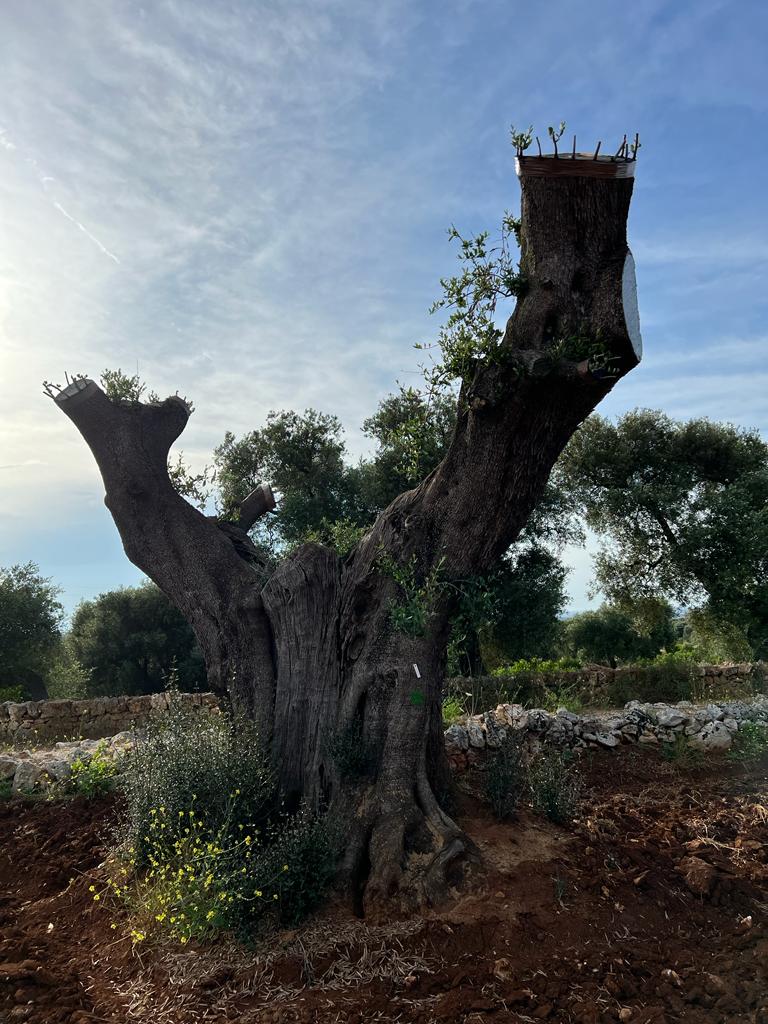
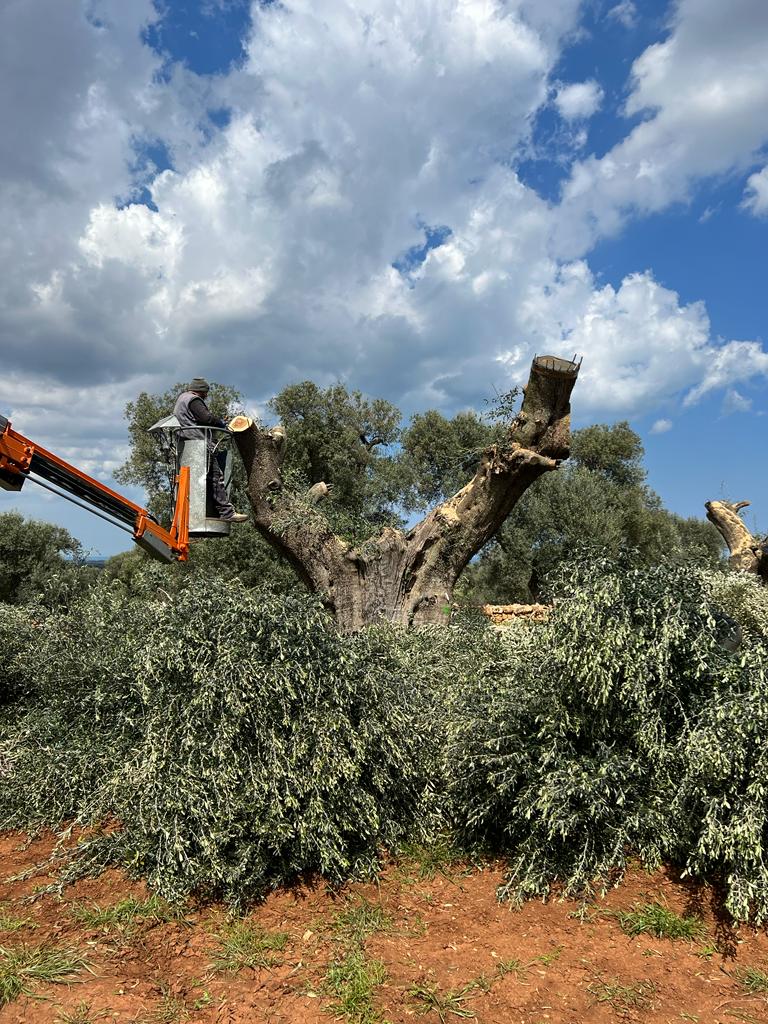
Φωτογραφία από ©Save the Olives 

Υψηλές θερμοκρασίες, ξηρές εποχές 

Τα ακραία καιρικά φαινόμενα κατατάσσονται ως περιβαλλοντικές απειλές υψηλού επιπέδου στην Έκθεση Παγκόσμιων Κινδύνων του Παγκόσμιου Οικονομικού Φόρουμ: κατατάσσονται στη δεύτερη θέση βραχυπρόθεσμα (2 χρόνια) και κατέχουν την πρώτη θέση μακροπρόθεσμα (10 χρόνια). Η έκθεση προβλέπει ότι πιο συχνές και παρατεταμένες ξηρασίες, καθώς και απότομες χαλαζοπτώσεις, θα επηρεάσουν σύντομα τη λεκάνη της Μεσογείου. 

Η παραγωγή ελαιολάδου της ΕΕ έπεσε κατακόρυφα σε ιστορικά χαμηλά επίπεδα το 2023, λόγω μιας εξαιρετικά ζεστής και ξηρής άνοιξης: μία μείωση σχεδόν 40 τοις εκατό των καλλιεργειών σε σύγκριση με το προηγούμενο έτος. Εκπρόσωπος της Ευρωπαϊκής Αρχής για την Ασφάλεια των Τροφίμων (EFSA) δεν αποκλείει την προοπτική δημιουργίας κόμβων παραγωγής ελιάς σε μη μεσογειακές χώρες: «Πολλές μελέτες έχουν διεξαχθεί και δημοσιευτεί από την επιστημονική κοινότητα που δείχνουν, για παράδειγμα, ότι η ελαιοκαλλιέργεια μπορεί να γίνει περισσότερο δύσκολη σε ορισμένες πιο ξηρές περιοχές και πιθανή σε βόρειες περιοχές, όπου οι χειμώνες γίνονται λιγότερο κρύοι». 

Φαίνεται ότι τέτοιες προβλέψεις έχουν ήδη υλοποιηθεί: το 2005 δύο αδέρφια, ιδιοκτήτες γης στο Πόλχαϊμ της Γερμανίας, ξεκίνησαν ένα φιλόδοξο έργο για να φυτέψουν έναν ελαιώνα κοντά στην Κολωνία. Η φυτεία τους διαθέτει περίπου 250 ελαιόδεντρα διαφορετικών ποικιλιών, συμπεριλαμβανομένων των Leccino, Cipressino και Olivastra Seggianese, φωλιασμένα στην καρδιά της Ρηνανίας. «Πουθενά στη Γερμανία οι χειμώνες δεν είναι πιο ήπιοι από τον Κόλπο της Κολωνίας», παρατηρεί ένας από τους αδελφούς. Αν και δεν χρησιμοποιείται ακόμη για την παραγωγή ελαιολάδου, το άλσος αυτής της πρωτοβουλίας προσφέρει μια γεύση από αυτό που μπορεί να αποδειχθεί ως κοινή πραγματικότητα τις επόμενες δεκαετίες. Άλλες παρόμοιες περιπτώσεις αναφέρονται σε πιο απομακρυσμένες περιοχές του κόσμου, όπως ο Καναδάς. 

Αν και η παραγωγή ελαιολάδου στην ΕΕ μοιάζει σταθερά με ημιτονοειδή κύμα στις εκθέσεις την τελευταία δεκαετία, παραμένει πρόκληση να φανταστούμε έναν μεγαλύτερο ανταγωνιστή από τη Μεσόγειο στην αγορά προς το παρόν. Ο καθηγητής Maurizio Servili της Επιστήμης Τροφίμων προειδοποιεί: «Αν σκεφτεί κανείς ότι η Ισπανία από μόνη της συνεισφέρει σχεδόν στο σαράντα τοις εκατό της παγκόσμιας παραγωγής, οι εξωμεσογειακοί παραγωγοί, de facto, δεν θα είναι σε θέση να αντισταθμίσουν την κατάσταση». Βλέπει το πρόβλημα να διαιωνίζεται: «Η συνέπεια της παραγωγής εντός της λεκάνης της Μεσογείου, και μάλιστα τελικά εκτός, αμφισβητείται ευρέως, ειδικά λαμβάνοντας υπόψη τη συγκομιδή των δύο τελευταίων ετών». 

 
Διάγραμμα από © Ευρωπαϊκή Επιτροπή – Γενική Διεύθυνση Γεωργίας και Αγροτικής Ανάπτυξης 

Φέτος, οι προσδοκίες παραμένουν υποτονικές: σύμφωνα με τη βραχυπρόθεσμη γεωργική έκθεση της Ευρωπαϊκής Επιτροπής, η ΕΕ πιθανότατα θα παράγει μόνο 1,5 εκατομμύριο τόνους ελαιολάδου (33 τοις εκατό λιγότερο από τον μέσο όρο 5 ετών). Υπολογίζεται ότι η ΕΕ θα εισάγει 160.000 τόνους από τρίτες χώρες (8 τοις εκατό λιγότερο από τον μέσο όρο της πενταετίας). Οι περισσότερες εισαγωγές προέρχονται από την Τυνησία, την Αργεντινή και την Τουρκία, αλλά αυτές οι χώρες δεν είναι άτρωτες στις ίδιες προκλήσεις της Νότιας Ευρώπης: η παραγωγή εκτός ΕΕ το 2023/24 αναμένεται να είναι 11 τοις εκατό μικρότερη από τον μέσο όρο 5 ετών, με τις εισαγωγές από την Τυνησία να μειώνονται κατά 35 τοις εκατό. Η Ευρώπη παράγει λιγότερο, εισάγει λιγότερο και επομένως καταναλώνει πολύ λιγότερο ελαιόλαδο από πριν, παρά τα ευρέως αναγνωρισμένα οφέλη του για την υγεία. 

Η Ευρώπη παράγει λιγότερο, εισάγει λιγότερο και επομένως καταναλώνει πολύ λιγότερο ελαιόλαδο από πριν, παρά τα ευρέως αναγνωρισμένα οφέλη του για την υγεία.

Φωτογραφία από ©Save the Olives 

Αντιμετώπιση της παρακμής 

Ο Servili υποστηρίζει ότι, παραδόξως, οι πρόσφατες εξελίξεις στην τεχνολογία επέτρεψαν την παραγωγή ελαιολάδου με πρωτοφανή ποιότητα, ξεπερνώντας οτιδήποτε έχει παρατηρηθεί στη λεκάνη της Μεσογείου και πέραν αυτής τις τελευταίες τρεις χιλιετίες. «Έχουμε ένα προϊόν που έχει θετικό αντίκτυπο στο προσδόκιμο ζωής των ανθρώπων και… πρέπει να παραμένει στο επίκεντρο της μεσογειακής διατροφής. Πρέπει λοιπόν να κάνουμε τα πάντα για να συμβεί αυτό», λέει. 

Το μέλλον του ελαιολάδου πέφτει στους ώμους περίπου 2,5 εκατομμυρίων ελαιοπαραγωγών στην ΕΕ (περίπου το ένα τρίτο όλων των αγροτών της ΕΕ). Αλλά καθώς οι διαδηλώσεις συνεχίζονται σε όλη την Ευρώπη και ένα ανησυχητικό ποσοστό 800 αγροτών να εγκαταλείπουν το επάγγελμα καθε μέρα, βιώσιμες απαντήσεις βρίσκονται μόνο στις διαρθρωτικές πολιτικές που περιλαμβάνουν τη δράση για το κλίμα. 

Η κοινοπραξία ελαιοκαλλιεργητών Italia Olivicola στην Ιταλία αναφέρει ότι οι μισοί από τους ελαιώνες της χώρας βρίσκονται σε κατάσταση παραμέλησης, με χαμηλή αντοχή σε ακραία καιρικά φαινόμενα και παράσιτα. Δεδομένου ότι το μέσο άλσος εκτείνεται μόνο σε είκοσι στρέμματα, η ομάδα τάσσεται υπέρ της συμπερίληψης των μικρών και μεσαίων ελαιοκαλλιεργητών στις συζητήσεις με τις εθνικές και περιφερειακές διοικήσεις. 

Φωτογραφία από ©Save the Olives 

Διψασμένες ελιές 

«Αν και θεωρείται ότι η ελιά είναι ανθεκτική στην ξηρασία, οι περισσότερες επιστημονικές μελέτες έχουν προβλέψει υψηλότερες καθαρές απαιτήσεις άρδευσης, μείωση της απόδοσης και μετατόπιση φαινολογικών φάσεων για τα ελαιόδεντρα στην περιοχή της Μεσογείου, λόγω της αυξημένης θερμικής και υδατικής καταπόνησης.», αναφέρει το Γραφείο Τύπου του Διεθνούς Συμβουλίου Ελαιοκομίας (IOC). Μια πρώιμη περίοδος συγκομιδής, που προκαλείται από την άνοδο της θερμοκρασίας, μειώνει την ποιότητα του ελαιολάδου. 

Μέχρι πριν από μερικά χρόνια, οι αγρότες στη Νότια Ευρώπη βασίζονταν στις εποχιακές βροχοπτώσεις για την καλλιέργεια ελιών. Σήμερα, παρακολουθούν μαθήματα για την αποτελεσματική χρήση του νερού. Οι βροχοπτώσεις πρέπει να βελτιστοποιηθούν ώστε να γίνουν πόρος: σημαντικές ποσότητες νερού από έντονες βροχοπτώσεις, ιδιαίτερα στην Ιταλία, δεν δεσμεύονται και δεν αποθηκεύονται αποτελεσματικά. «Πρέπει να φτιάξουμε λίμνες στην πλαγιά ενός λόφου και άλλες δεξαμενές νερού. Πρέπει οπωσδήποτε να επανεξετάσουμε ολόκληρο το σύστημα διαχείρισης και ανάκτησης νερού, όχι μόνο σε εθνικό επίπεδο, αλλά και για την Ισπανία, αν και καλύτερα εξοπλισμένη, και την Πορτογαλία», προσθέτει ο καθηγητής Servili. 

Φωτογραφία από ©Save the Olives 

Η βροχόπτωση πρέπει να βελτιστοποιηθεί ώστε να γίνει πόρος. 

Εκτός από την υπεράσπιση της ενισχυμένης αποδοτικότητας της χρήσης νερού, το IOC τονίζει την αναγκαιότητα προώθησης ενός βιώσιμου τομέα ελαιολάδου. Αυτό συνεπάγεται την ενίσχυση της υγείας του εδάφους με οργανική ύλη, την απαλλαγή από τις ανθρακούχες γεωπονικές εργασίες με τη χρήση βιοκαυσίμων για οχήματα και μηχανήματα, τη χρήση μη συνθετικών λιπασμάτων, τη βελτίωση της ενεργειακής απόδοσης της διαδικασίας και τη χρήση όλων των παραπροϊόντων, όπως φύλλα για κομποστοποίηση και λύματα για άρδευση. 

Θάνατος και νέα ζωή 

Η Πεδιάδα των Μνημειακών Ελαιών (Piana degli Ulivi Monumentali), η πεδιάδα με την υψηλότερη συγκέντρωση υπεραιωνόβιων ελαιόδεντρων σε ολόκληρη τη λεκάνη της Μεσογείου, είναι μια από τις περιοχές που έχουν πληγεί περισσότερο από τη Xylella στην Απουλία. Ακριβώς εδώ, κοντά στις πόλεις Φαζάνο, Οστούνι και Καροβίνιο, τοπικά μοιρολόγια ανακοίνωσαν τον θάνατο εννέα ποικιλιών ελαιόδεντρων, που επηρεάστηκαν από το παθογόνο. 

Η Save the Olives, μια μη κερδοσκοπική ένωση στην Απουλία, συνεργάζεται με το Εθνικό Συμβούλιο Έρευνας (CNR) σε διάφορα έργα για τη διάσωση των μνημειακών ελαιόδεντρων. «Διεξάγουμε τρία εργαστήρια εμβολιασμού, γιατί χρειαζόμαστε εξειδικευμένους ανθρώπους για την επόμενη εκστρατεία την άνοιξη», λέει ο Patrizio Ziggiotti, γενικός γραμματέας της ένωσης. «Αν εμβολιάσεις το δέντρο πριν μολυνθεί, μπορείς να το σώσεις». 

Η επιστημονική έρευνα που προωθείται από έργα που χρηματοδοτούνται από την ΕΕ έχει σημειώσει τεράστια πρόοδο πρόσφατα. Το Ινστιτούτο Αειφόρου Προστασίας Φυτών (IPSP) του CNR στο Μπάρι εντόπισε δύο ποικιλίες, την Leccino και τη FS 17 (Favolosa), που θεωρούνται ανθεκτικές στη Xylella, που έχουν εγκριθεί για φύτευση σε μολυσμένες περιοχές. «Οι νέες ποικιλίες είναι λιγότερο διψασμένες, είναι γηγενείς και παραγωγικές», λέει ο Ziggiotti. «Χρηματοδοτήσαμε και κατασκευάσαμε ένα παραβάν», ένα ειδικό θερμοκήπιο από δίχτυ κατά των εντόμων, «για να τα αποθηκεύουμε μακριά από παθογόνα και παράσιτα και να τα καταχωρούμε ως νέες ποικιλίες». Η μάχη για τη διάσωση των ελιών μόλις αρχίζει. 

« La gauche ne les connaît plus ». Entretien avec Nora Hamadi 

Ce que la France a vécu ces derniers mois n’est rien de moins qu’une montagne russe politique : après les élections européennes qui ont vu l’extrême droite décimer ses opposants, les forces de gauche ont défié les attentes des sondages nationaux pour former le plus grand bloc politique au niveau national. Malgré ces bons résultats, les progressistes français se trouvent dans une position plus faible que jamais, en grande partie à cause du fossé grandissant entre les politiciens et leur électorat. Entretien avec Nora Hamadi.

Edouard Gaudot: La France a vécu ces dernières semaines une séquence politique particulièrement intense et dramatique, entre la victoire massive de l’extrême-droite aux élections européennes, puis une dissolution surprise et deux tours de législatives au pas de course, sous la menace d’une majorité absolue pour le RN mais conclues sur une victoire relative de l’alliance de gauche et la tripartion en blocs relativement égaux de l’Assemblée nationale. Avec ton œil à la fois de journaliste et d’éditorialiste, engagée sur les questions européennes et les questions sociales, quelle lecture et quels enseignements en retires-tu ? 

Nora Hamadi: Une grande confusion. J’en retiens aussi une déconnexion entre les espaces politiques et médiatiques et la réalité du terrain, des Français, et de leurs préoccupations. Dans le bruit médiatique, on n’entend que les logiques partisanes de coalitions ou de stratégie interne aux partis. Quelques éléments programmatiques émergent, mais noyés dans les mises en scène polémiques, notamment sur les questions de chiffrage du programme du NFP.  

Je perçois en fait, et c’est dit sans mépris, un certain manque de compétences politiques institutionnelles dans le grand public qui n’a pas su lire la séquence : pourquoi un vote pour l’Europe devrait mener à une dissolution, et des législatives anticipées ? D’ailleurs beaucoup d’éditorialistes et de commentateurs n’ont pas compris non plus ce qu’a fait Emmanuel Macron. Moi, sur le terrain, j’ai rencontré beaucoup de gens désorientés, qui demandaient qu’on leur explique la situation. Quand je compare avec les plateaux où j’interviens, composés d’éditorialistes prisonniers de leurs logiques étroites de traitement des disputes internes et des rapport de force entre partis, dans les partis, je suis frappée par l’éloignement sidéral entre les citoyens et la sphère politico-médiatique. 

Cette déconnexion a engendré un bruit de fond, une écume toxique, qui alimente encore plus le discrédit et le rejet d’une classe politique uniquement intéressée par la guerre des places au détriment des intérêts des gens. 

Pourtant, les Français se sont mobilisés pour cette séquence dramatique… 

Oui, d’ailleurs c’est ça qui est intéressant. En fait, tout ce que n’ont pas vraiment fait les politiques et les médias, a été accompli ailleurs, grâce à un gros travail des structures de la société civile organisée et les acteurs citoyens, à la fois en quartiers populaires et ailleurs : avec des fronts antiracistes, des mobilisations du vote, des prises de position publiques. J’ai vu des structures ad-hoc se monter en quelques jours à base de fils WhatsApp pour organiser des tractages, des porte-à-porte, pour répondre à l’urgence de l’incendie qui menace. Cet effort de pédagogie a eu beaucoup plus d’effet. C’est la société civile, qui a clairement fait montre de la plus grande responsabilité sur les enjeux. Rien à voir avec les ergotages mesquins des chefs de partis qui refusaient de « choisir entre les extrêmes » ou de donner des consignes de votes.  

Ainsi, on a beaucoup entendu de gens sur le terrain pénétrés par cette petite musique, qui disaient, « non, mais moi, je n’ai pas envie de choisir entre la peste et le choléra ». Ça, c’est une formule qui a très bien fonctionné. Comme la question de savoir si le RN est « vraiment d’extrême droite ». Cela dit à quel point on est dans une forme de dépolitisation générale, où la communication politique et la dimension marketing écrasent le débat de fond. 

Tu pointes ici une faillite dramatique des médias dans leur rôle d’intermédiaires et de médiateurs politiques. On entend souvent d’ailleurs que les médias ont un rôle direct dans la montée de l’extrême-droite en France. Jusqu’à quel point est-ce vrai selon toi ? 

Alors il faut préciser que moi, je participe autant à des médias à la fois culturels voire « intello », d’une sensibilité plutôt progressiste, qu’à des médias au spectre plus large comme BFM, complètement inscrits dans « l’économie de l’attention » et ses logiques d’audience. Là où il n’y a plus aucune hiérarchisation de l’information, où l’important c’est ce qui vient d’arriver. Là où on feuilletonne, on crée du récit, des cliffhangers – c’est littéralement de la téléréalité politique, centrée sur les échanges de propos, de tweets et de réactions d’indignation plus ou moins calculées. Dans cette logique, le Rassemblement national, avec ses 10-12 millions d’électeurs donc de spectateurs potentiels, tient une place primordiale dans le dispositif. Au point que j’ai même vu arriver à partir du mois de mai des éditorialistes et des communicants « pigés » rémunérés en plateau au même titre que moi en tant que journaliste. Donc des anciens « conseillers » ou « communicant » de Marine Le Pen ou du RN présents sur tous les plateaux tous les jours et salarié par une grande chaine d’info en continu. 

Il y a clairement un lien direct, qui ne se limite pas à la galaxie du groupe de média Bolloré, dans la banalisation du discours de l’extrême droite. Cette parole, raciste, xénophobe, qui est celle du Rassemblement national occupe donc le terrain et les plateaux, parce qu’on estime qu’on ne « peut pas négliger 11 millions de Français ». C’est un cercle vicieux entretenu par les médias Bolloré qui jouent un rôle primordial dans cette concurrence exacerbée liée à l’économie de l’attention.  

Il y a des enquêtes qui le soulignent, et ce sont des choses qu’on m’a confirmées en interne : des consignes aux programmateurs et aux rédacteurs en chef de faire la part belle aux éditorialistes et aux invités d’extrême droite. Cela signifie qu’on a des plateaux extrêmement déséquilibrés, où par exemple, je me retrouve souvent seule, assignée à une identité politique de gauche et « populaire ». 

C’est aussi ma différence : je suis sur le terrain et je viens rapporter ce que je vois. Mais le dispositif médiatique fonctionne dans des logiques d’assignation et de postures, avec des plateaux qui alimentent la polarisation et une culture du clash qui correspondent au modèle économique : la politique spectacle. Animée en outre par des journalistes qui n’ont parfois pas assez de culture politique ou de professionnalisme pour poser de vraies questions ou se démarquer des éléments de langage diffusés par les partis. C’est complètement déconnecté du réel des gens. Ce sont des choses qui personnellement me fâchent et politiquement m’inquiètent.  

Outre le rôle des médias, selon toi, la montée de l’extrême droite en France peut-elle être imputée au bilan de ce septennat macroniste ? Et si oui pourquoi ? 

En fait, le problème c’est la pratique du pouvoir. Dès 2017, alors qu’il est élu face à Marine Le Pen, une des premières choses que Emmanuel Macron dit c’est : « mon objectif c’est de faire baisser l’extrême droite ». Mais très vite, il s’enferme dans un schéma manichéen et puissamment dangereux, très bien illustré par les européennes de 2019 : les nationalistes contre les progressistes. J’avais fait d’ailleurs des papiers pour alerter sur la dangerosité de cette opposition, car il s’agit au fond des deux faces d’une même pièce. Cela suppose que les progressistes seraient un seul camp, donc que l’Europe, le progrès, le bien, c’est Macron. Et ceux qui sont contre Macron et sa vision seraient forcément des nationalistes, des populistes, des gens dangereux. Il a donc fait de Marine Le Pen sa première opposante, ce qui s’est confirmé en 2022, où son score a encore augmenté : elle a pu former un groupe de 89 députés à l’Assemblée.  

Donc oui, avec sa posture politique tactique, Macron a conforté le rôle du RN comme seule alternative crédible. En plus, sur le conseil de ses proches, il l’a continuellement alimenté avec ses triangulations bancales sur les questions mémorielles ou sur la loi immigration, votée avec le Rassemblement national, clairement.  

Sa pratique du dialogue social aussi a été catastrophique. La gestion des Gilets jaunes ou la réforme des retraites : ces politiques ont moins renforcé le RN en tant que tel que la détestation de Macron et de son camp. Le RN a su capitaliser sur cette colère. 

C’est aussi une des erreurs de la gauche, qui ne sait plus s’adresser aux classes populaires et donc n’a pas pu canaliser ces colères. 

Dans les rapports de force actuels, on a vu la cristallisation des deux blocs que tu viens de citer, et l’émergence d’un troisième bloc : le Nouveau Front Populaire. Dans un système français qui punit la désunion, cette alliance a réussi a conquérir une majorité relative. A la grande surprise on voit donc le retour de la gauche dans le jeu. Premièrement, de quelle gauche s’agit-il ? Et deuxièmement, qu’est-ce que cela dit selon toi des aspirations des Français ? 

Quelle gauche ? C’est une question plus difficile qu’il n’y paraît. Je pense qu’il y effectivement a un peuple de gauche, mais en l’occurrence, il y a aussi eu un « front républicain » pour faire barrage à l’extrême droite au pouvoir. Je ne sais pas exactement quelle gauche a gagné. Parce que dans cette alliance, il y a plusieurs gauches qui s’adressent à des segments différents de la société. Avec les bons résultats aux européennes, il y a le retour des sociaux-démocrates, pragmatiques, et tous leurs vieux caciques – comme le montre le retour de François Hollande à l’Assemblée. La France Insoumise de Jean-Luc Mélenchon essaie de s’adresser plus aux classes populaires, mais ce sont surtout les jeunes, les étudiants, et les quartiers populaires qui suivent. Les Verts, pour être honnête, je ne sais pas vraiment à qui ils parlent, si ce n’est à un microcosme urbain diplômé.   

L’urgence électorale et politique a permis une forme d’alliance dont le plus dur n’était pas le fond – car il y a consensus sur une grande majorité de la substance, sur les questions de justice sociale, de justice environnementale, de redistribution, d’antiracisme, de xénophobie, d’égalité des droits… Sur les valeurs et les enjeux, les gauche sont à peu près alignées. Mas pas sur la stratégie. Ces formations politiques ne parlent pas aux mêmes personnes et sont incapables de penser une base électorale élargie. La preuve, l’addition de toutes leurs forces, même les plus marginales les amène vers les 30%. La France n’a jamais été aussi à droite et le bloc de gauche n’a jamais été aussi faible. 

Justement, tu as eu des mots très durs dans plusieurs séquences médiatiques récentes, aussi bien vis-à-vis de certaines de ses figures que vis-à-vis de la gauche en général. Est-ce que tu pourrais revenir sur les reproches majeurs fait à « cette gauche-là » dont tu te faisais la porte-parole ?  

C’est d’abord un sentiment de colère, parce que la gauche a littéralement décidé d’abandonner la base électorale qui était la sienne, c’est-à-dire les classes populaires et une partie des petites classes moyennes. Elle a embrassé la métropolisation, la globalisation, et accepté d’abandonner une partie des citoyens sur l’autel du pragmatisme, notamment économique… Le symbole de cette rupture est Lionel Jospin qui disait en 2001 par exemple, « l’État ne peut pas tout ».  

Les Verts, pour être honnête, je ne sais pas vraiment à qui ils parlent, si ce n’est à un microcosme urbain diplômé.

Ça se traduit comment dans les politiques, par exemple ? 

Ça se traduit effectivement par des politiques d’abandon de certains territoires, ou de certaines politiques publiques, notamment vis-à-vis de la jeunesse, de l’éducation populaire, de l’accès à la culture. Certes, il y a aussi des logiques contraintes par des éléments financiers surtout à partir de 2007, mais la gauche qui avait gardé des régions, des départements s’est mise à faire des choix budgétaires et politiques qui répondaient à d’autres priorités. Ces choix-là, on les paye aujourd’hui.  

Quand je parle d’abandon, c’est littéral : c’est d’ailleurs mutuel, car c’est le moment où les quartiers populaires se réfugient dans l’abstention. Ce qui favorise alors une forme de politique clientéliste : il faut faire des politiques publiques qui s’adressent à ton électorat. En gros, les retraités, les actifs les plus âgés, et les conscientisés, qui eux votent. On finit par abandonner une partie de ceux à qui on doit s’adresser. 

Donc oui, on peut en vouloir à la gauche, mais aussi aux syndicats, aux corps intermédiaires qui ont cessé de faire leur travail : ces espaces d’intermédiation ont disparu. Certes, il y a des explications plus exogènes, mais l’affaiblissement des espaces d’intermédiation, de représentation et de socialisation politique est général. Or ces espaces étaient plutôt à gauche et progressistes : les grandes maisons d’éducation populaire, la Ligue de l’enseignement, les centres Léo-Lagrange, les CEMEA (un dispositif d’éducation populaire)… On a abandonné le travail de lien direct qui faisait de l’éducation à la citoyenneté. Des territoires entiers ont vu leurs structures fermer une à une, les associations disparaître faute de moyens. Je parle de territoires qui sont pourtant insérés dans des métropoles, mais complètement abandonnés. Ma ville d’enfance, typiquement est à 19 kilomètres de Paris, mais c’est un désert médical, et toutes les structures dont j’ai bénéficié, gamine, n’existent plus. 

Ces structures qui créaient du lien social, du commun, une éducation à la citoyenneté et l’émancipation, elles ont été réduites à portions congrues. Derrière, tu as une forme d’isolement, de désaffiliation de la part d’une grande partie des électeurs. C’est ça aussi l’explosion de l’abstention. Là, on se gargarise des chiffres de la participation… Certes, 67 %, c’est bien. Mais c’est un électeur sur trois quand même qui n’a pas été voter. Ce n’est pas rien. Ça fait environ 16 millions de gens qui se taisent. 

Un exemple paradigmatique de ce décrochage de la gauche, c’est les Gilets jaunes. La manière dont la gauche a méprisé et négligé ce puissant mouvement social dans les premières semaines montre à quel point le niveau de déconnexion du personnel politique qui la compose est dangereux. Ça explique aussi cet espace rabougri qu’elle occupe aujourd’hui. Parce que pour beaucoup, ils n’ont plus vraiment de lien avec les espaces militants, ou alors un lien occasionnels sur des actions, notamment les mouvements écolos, comme Extinction Rebellion ou Les Soulèvements de la Terre, quand il s’agit d’aller manifester contre les mégabassines. Mais cette relation plus informelle qui pouvait exister jusque-là, qui permettait à la fois d’aller chercher des militants, d’être en lien avec la société civile et d’avoir quelque chose de l’ordre d’un biotope politique, elle s’est cassée. D’ailleurs, les Gilets jaunes ont émergé en dehors de toute représentation, à partir d’une pétition. 

Or les premières semaines, la grille de lecture majoritaire des politiques de gauche y voyait un mouvement de factieux, proto-fascistes, de gens racistes, xénophobes qui voulaient garder leur bagnole en périurbain. On est à quel niveau de hors sol et de déconnexion vis-à-vis du terrain ? Le personnel politique de gauche a dénié à ces gens la possibilité d’avoir un propos politique parce qu’il n’était pas formaté pour être appréhendé par des Sciences Po/ENA ? 

Quand j’ai exprimé publiquement ma colère sur les renoncements de la gauche c’était justement pour lui rappeler ses devoirs à l’égard des classes populaires, des plus modestes, des minorités, ces publics abandonnés par des renoncements successifs. Et puis pour dénoncer leur déconnexion : ils ne sont plus capables de représenter ces classes-là, ne les connaissent plus, trop enfermés dans leurs espaces urbains, diplômés, etc.  

On voit bien que les candidats issus justement de ces milieux, ils étaient plutôt au Rassemblement National. 

Et oui. Certes, LFI a fait un petit effort mais dans des logiques aussi d’assignation à résidence culturelle et territoriale. Ce qui est aussi très dangereux. C’est aussi ça que j’ai voulu souligner dans le débat : les classes et les quartiers populaires en général méritent mieux que des formes d’assignation qui les conduiraient à devoir aller voter seulement parce qu’on s’adresse à eux en invoquant une forme de solidarité naturelle sur le Proche-Orient-Gaza, ou sur leur pratique religieuse supposée parce qu’avant d’être des « musulmans d’apparence » ils sont d’abord des classes populaires. D’ailleurs, aujourd’hui, dans ces quartiers populaires où je passe beaucoup de temps, les primo-arrivants et leurs enfants sont désormais pour beaucoup issus du sous-continent indien, ou d’Afrique subsaharienne, qui compte bon nombre de catholiques ou d’évangéliques. Alors peut-on réduire véritablement cette diversité ? Pourquoi les essentialiser ? 

Donc en somme, la gauche serait victime de la sociologie à deux niveaux : sa sociologie propre et ses représentations, fantasmes ou préjugé sociologiques ? 

Tout à fait. C’est une double déconnexion. Il y a aussi une erreur de lecture avec cette tripartion simpliste entre « métropole » « rural » et « périurbain ». Même là, finalement, il y a une part d’essentialisation, parce que dans cette France métropolitaine urbaine, il y a des poches de pauvreté énormes. Dans une ville moyenne comme Laval, en Mayenne, ou Guéret, dans la Creuse, il y a des quartiers considérés prioritaires mais qui se situent dans les vieux centres-villes. Il faut qu’on sorte de ces représentations catégorisées, comme s’il y avait une forme de tripartition territoriale, auquel correspondrait une tripartition politique. On a, nous aussi nos « white trash », ces français blancs pauvres méprisés, dans le Nord, l’Aisne ou dans l’arrière-pays du Sud Est, par exemple, qui en font des bastions RN. Le réel est beaucoup plus complexe que les lectures qu’on en donne. 

Concernant les Verts, il y a eu un paradoxe intéressant dans cette séquence. J’aimerais que tu nous donnes en quelques mots ta lecture de leur échec aux européennes et de leur redressement au niveau national. 

Merci le NFP, en fait. La réussite principale des écologistes français, c’est d’avoir justement su s’insérer dans une dynamique de coalition. 

C’est ça ce qui les sauve. Et pour le coup, leur Secrétaire Nationale, Marine Tondelier, quand elle lance les négociations sur le Nouveau Front Populaire dès le soir de la dissolution, a totalement conscience que c’est justement en s’inscrivant dans cette dynamique qu’elle va pouvoir sauver ses troupes, parce que le rapport de force leur est très défavorable. 

Revenons sur cet échec retentissant aux européennes, c’est-à-dire à « leur élection » où ils font leur plus mauvais résultat depuis l’anéantissement de 1994. Mis à part la concurrence, comment expliques-tu cet effondrement total ? 

Il y a à la fois la campagne en elle-même, difficile dans le contexte de la montée du RN mais aussi les choix de campagne portés par la tête de liste. J’y ai vu l’exemple archétypal de la déconnection du réel. Cela a évidemment provoqué un traitement médiatique à charge qui a fini par insister sur ces errements et cette déconnexion. Le lancement de campagne, les happenings dansés, sont autant de signes d’une campagne hors sol qui s’adresse d’abord aux militants et certainement pas aux gens. Elle n’a jamais décollé ni passé « le mur du son », c’est-à-dire qu’en fait on ne l’a pas entendue. Inexistante, transparente, malgré la crise agricole, où finalement on a plus vu la Secrétaire nationale Marine Tondelier – j’avoue que cette dernière a gagné mon respect sur cette séquence. Je sais qu’elle a justement à cœur d’élargir et d’embrasser une forme d’écologie populaire. En aura-t-elle les moyens ? 

Il est urgent de faire prendre un virage populaire à l’écologie politique : c’est quelque chose qui a deja existé : La Zone d’Ecologie Populaire avait été un courant au sein des Verts au mitan des années 2000. Il s’agissait de penser à ceux qui vivent une sobriété contrainte, les classes populaires, et sont les premiers écolos d’une certaine manière. En outre, ils sont aux avant-postes des dégradation de l’environnement et de leur condition de vie au quotidien : qualité de l’eau, de l’air, de l’alimentation, environnement bruyant, pollué, énergie chère, passoire énergétique… 

Il est urgent de faire prendre un virage populaire à l’écologie politique.

Je pense vraiment que si les Verts n’avaient pas cette sociologie particulière, et qu’ils étaient eux-mêmes en capacité de penser leurs pratiques à l’aune des premiers concernés, ils seraient la première force politique du pays, au vu des enjeux. Mais pour ça il faut être humble et savoir parler de manière extrêmement accessible et simple aux gens. Et les changements sociaux et culturels, comme la consommation de viande ou l’usage de la voiture par exemple, il faut savoir les accompagner pour opérer la prise de conscience, il faut les accompagner à penser et politiser leurs pratiques.  

Pour finir, j’aimerais qu’on replace la France dans un contexte un peu plus large européen. Avec une extrême droite conquérante, aux portes du pouvoir, qu’est-ce que ça dit, en fait, à la fois de la France et de l’Europe ? Peut-on échapper ? Quels sont nos leviers par rapport à l’extrême droitisation de l’espace politique européen ? 

Un seul : il faut « délivrer ». Le mouvement, il n’est même pas juste européen, il est mondial. On assiste à un retour des logiques de rapport de force brutes. On n’est même plus juste dans le soft rapport de force, on est dans quelque chose de presque « masculiniste » qui participe d’une brutalisation de la vie publique. On est vraiment dans des logiques d’écrasement dû au fait majoritaire et la Ve République, par exemple, en France, est symptomatique de cela. Le consensus y est vécu comme une forme de faiblesse. 

Un changement de régime est indispensable. Nous sommes, à mon sens, dans une impasse de la cinquième. Ça fait des années qu’on évoque la possibilité d’introduire de la proportionnelle aux scrutins et finalement, on ne l’a jamais fait. Je pense qu’à l’image de ce que demandaient les Gilets jaunes avec le RIC, Il y a aussi une demande de partage de pouvoir, de remédiation, de participation. On n’est pas dans le même système que dans les années 60 où il suffisait de convoquer les citoyens tous les cinq ans. Il y a un besoin, et une envie d’expression plus régulière, une volonté de transparence aussi, d’être entendu, écouté.  

Quant à l’Europe : on ne peut plus avoir une Europe hémiplégique. On a instauré la libre circulation des capitaux, des hommes, des marchandises, mais ce « grand marché » exige aussi la protection des européen.nes, et de nos valeurs : on n’a pas assez protégé ceux qui sont les forces vives de ce continent, les individus. Et on les a mis en concurrence directe avec leurs voisins et avec le reste du monde, avec cette idée toute thatchérienne du « there is no alternative » face à une dérégulation morbide et mortifère. La libéralisation à outrance, sans approfondissement, on en paye le prix politique aujourd’hui.  

La peur du déclin, ce ressenti de déclassement, c’est quelque chose qui traverse toute l’Europe. Ce sentiment d’horizon bouché qui nous porte à croire que l’avenir de nos gosses ou petits-enfants sera moins bon que le nôtre… Ce ressenti-là, il faut le prendre en compte en politique désormais. La politique, ce n’est pas juste une affaire de chiffres et de finances publiques. Il faut aussi offrir une sécurité aux gens : sociale, alimentaire, écologique, environnementale… 

C’est parce qu’on se sent en sécurité face aux défis de l’avenir qu’on peut s’offrir un horizon. 

“The Left no longer knows them”: France’s Big Disconnect 

What France has experienced in the past months is nothing short of a political roller coaster: following the European elections which saw the far-right decimate opponents, left-wing forces defied expectations in national polls to form the largest political bloc domestically. Despite this strong showing, however, the French progressives are in a weaker position than ever before, due largely to a growing rift between politicians and their electorate. An interview with Nora Hamadi.

Edouard Gaudot: Over the past few weeks, France has lived through an extremely intense and dramatic political period. It began with a resounding victory for the extreme Right in the European elections, followed by a shock dissolution of parliament and two rounds of voting in legislative elections, with the threat of an absolute majority for the far-right National Rally (RN), followed by a relative victory for the left alliance New Popular Front (NFP), and finally the division of the National Assembly into three relatively equal blocks. As both a journalist and columnist on European and social issues, what do you make of this, and what lessons should we take from it? 

Nora Hamadi: I see huge confusion. I also observed a disconnect between the political and media spheres and the real lives and worries of French people. With all of the media noise, we only hear the partisan arguments of the various groupings, or the parties’ internal strategies. While some manifesto pledges have come through, they have been drowned out by the political squabbling, particularly on issues of costings for the NFP’s manifesto.  

I have also noticed that – and I say this with respect – the general public seems to lack knowledge of institutional politics and does not understand the political process. They are wondering why a European election has led to a dissolution of parliament and early legislative elections. Likewise, many columnists and commentators have also struggled to understand what Emmanuel Macron did. I have met many people on the ground who are confused and looking for an explanation of the situation.  

When I consider the studios that I work in, where columnists sit in their echo chambers discussing internal party disputes and wranglings and power plays between parties, I am struck by the astronomical distance between normal citizens and the political and media sphere. 

This disconnect has allowed toxic rhetoric to creep in, which further feeds into the discrediting and rejection of a political class interested only in fighting for its own positions, and not in the concerns of real people. 

And yet, the French people came together in this dramatic moment. 

Yes, and that is the interesting part. In fact, others filled the gap left by politicians and the media, with huge amounts of work achieved by grassroots organisations and citizens on the ground, from working-class areas and elsewhere. They came together to form anti-racism movements and deliver campaigns to get people to vote and make public policy statements. I saw ad-hoc groups created on WhatsApp in just a few days to organise leafleting and canvassing as a response to the significant threat.  

This educational effort was far more effective. Grassroots organisations clearly showed the greatest sense of responsibility on these issues, unlike the petty nit-picking of the party leaders, who refused to “choose between the extremes” or to back opposing candidates to tackle the far right.  

There were many people on the ground who embraced this outlook, saying, for example, that they would “not choose between the plague and cholera.” That was a line that worked very well. As for the issue of knowing whether the RN “really is the extreme right” as heard in the mainstream conversation, this demonstrates to what extent politics has disappeared from general discourse, with political communications and marketing crushing the fundamental arguments. 

You point out a dramatic failure by the media in their role as intermediaries and political mediators. People often say that the media has a direct role in the rise of the extreme right in France. How true would you say this is? 

I should specify that I am involved both in what you might call “high-brow” cultural media with a more progressive view, and media with a wider reach such as the 24-hour channel BFM-TV, which is fully invested in the “attention economy” and audience figures. There, information is no longer hierarchical, and only the most recent event is important. News is sensationalised and dramatised, to the point of becoming a soap opera or political reality show, hinging on wars of words, tweets and outraged reactions with varying degrees of calculation.  

The National Rally, with its 10-12 million voters as potential viewers, plays a key role in this whole system. To underline this, in May I even saw “freelance” paid columnists and spokespeople in TV studios, with the same status as me, a journalist. Thus, you would have the former “advisor” or “spokesperson” for Marine Le Pen or the RN in all of the studios, every day, paid by a major news channel. 

There is clearly a direct link between the mainstream media and the general normalisation of the discourse of the extreme right, and this is not limited to [media tycoon] Vincent Bolloré’s media empire. Therefore, airtime is given to the National Rally’s racist and xenophobic discourse, as channels do “not want to overlook 11 million French people”. The Bolloré empire maintains this vicious circle and plays a key role in the ever-fiercer competition for attention.  

Surveys confirm what I have already heard from internal staff: that programme schedulers and news editors are being advised to accommodate columnists and guests from the extreme right. This means that our studio panels are extremely unbalanced, which is why, for example, I often find myself as the only person assigned to the left-wing and “working class” political identity. 

That is also where I am different. I am on the ground, and I report what I see; but the media machine is based on taking sides and posturing, with studios feeding polarisation and conflict culture to match their business model of politics as entertainment. Often, programmes are led by journalists who do not have the political experience or professionalism to ask the questions that need to be asked, or to rise above the “spin language” used by politicians. This is a complete disconnect from people’s everyday lives. It is something that personally angers me and politically worries me.  

Other than the role of the media, do you think that the rise of the extreme right in France can be blamed on the record of the past seven years of Macron’s presidency? And if yes, why? 

In fact, the problem is the way Emmanuel Macron has exercised power. In 2017, one of the first things that he said when he was elected against Marine Le Pen was: “My goal is to bring down the far right.” This profoundly dangerous black-and-white view quickly took hold, as perfectly demonstrated by the 2019 European elections, in which the “nationalists” were pitted against the “progressives”.  

There is clearly a direct link between the mainstream media and the general normalisation of the discourse of the extreme right.

I wrote articles warning about the dangers of this clash because the two camps were fundamentally two sides of the same coin. The dominant discourse assumes that “progressives” are all in one camp, supporting Europe, progress, and positivity under Macron, while those who are against Macron and his vision are clearly nationalists, populists and dangerous people. Macron therefore made Marine Le Pen his main opponent, a position which she consolidated in 2022 with an increased tally of 89 deputies (MPs) at the National Assembly.  

So, yes, Macron’s tactical political posturing bolstered the RN as the only credible alternative. In addition, following the recommendations of his closest advisors, he has fed the RN with his clumsy lopsided debates on remembrance issues and on the Immigration Act, which, naturally, he voted on with the National Rally.  

Macron’s attempts at social dialogue have also been a disaster. The way in which the Gilets jaunes (“Yellow vests”) and retirement reform policies have been handled has not so much bolstered the RN as increased resentment towards Macron and his entourage. The RN has been able to capitalise on this anger. 

This is also where the Left has failed, as it wasn’t able to reach the working class and channel its anger. 

In the current landscape of power relations, we have seen the emergence of a third block called the New Popular Front. In a French system which punishes disunion, this alliance was able to win a relative majority. Firstly, who makes this left-wing grouping? And secondly, what does this say about the deeper aspirations of the French people? 

“Who” makes the Left is a more difficult question than you would think. I think that there is in fact a left-wing electorate, but in this case, there was also a so-called “republican front” which stopped the extreme right from gaining power. I don’t know exactly which left-wing family won, because this alliance contains several different groups who all appeal to different segments of society.  

The pragmatic social democrats made a comeback with good results in the European elections, bringing with them some established leaders, illustrated by François Hollande’s return to the National Assembly. Jean-Luc Mélenchon’s France Unbowed party (La France Insoumise) is trying to appeal to the working classes, but his main supporters are young people, students, and those from poorer neighbourhoods. And, quite honestly, I am not sure who the Greens are targeting, other than a microcosm of urban, educated people.   

This alliance was born of an electoral and political emergency. The most difficult part was not the substance, as there is a consensus on most issues including social justice, environmental justice, redistribution, combating racism and xenophobia, and fighting for equal rights. The left-wing parties are more or less aligned on their values and the challenges.  

However, this is not the case for strategy. These political groups do not appeal to the same people and are unable to think in terms of a wider voter base. The proof of this is that even when combining all of their strengths, and bringing in even the most marginal groups, they are on around 30 per cent. France has never been so right-wing, and the Left has never been as weak as it is now. 

On that topic, in recent rounds of media interviews, you expressed some very harsh opinions of certain figures as well as the Left in general. 

It was first and foremost a feeling of anger, as the Left literally decided to abandon its own voter base, i.e. the working classes and some of the more modest middle classes. It embraced urban expansion and globalisation and agreed to sacrifice some of its citizens for the sake of (primarily) economic pragmatism. [Former Socialist Prime Minister] Lionel Jospin, who in 2001 said “the state cannot do everything”, was a symbol of this rupture.  

How does that abandonment translate into policies? 

Effectively, it translates into policies in which certain regions have been abandoned, or where some state policies for young people, working-class education, and access to culture have disappeared. Of course, the financial situation after 2007 set some constraints, but while the Left had kept many local governments (regions and “départements”), it made some budgetary and political decisions aligned with different priorities. We are now paying the price of these decisions.  

This abandonment was also mutual, as this was the moment when the working classes became disengaged and started to abstain. That consequently led to a form of “client politics” in which you design policies aimed at your own voter base. They may be pensioners, older working people, and more engaged people who vote. You then end up leaving behind some of those people you should be tending to. 

So, yes, you can blame the Left, but also the unions, and the intermediary bodies who are no longer doing their jobs. These intermediary spaces have disappeared. There are of course wider reasons, but there has been a general weakening of intermediary or representative spaces and spaces for politics in society. And these spaces tended to foster the Left and more progressive ideas. They included the main working-class education centres, namely Ligue de l’enseignement (“Teaching League”), the Léo-Lagrange centres and the CEMEA (a working-class education scheme).  

We have abandoned the work we did on creating direct links to educate the citizenship. One by one, these hubs have been closing across entire regions due to a lack of resources. I am talking about urban regions, which have been completely abandoned despite being in towns or cities. I grew up in a town 19 kilometres from Paris, which is a medical desert and where all the centres that I used as a child no longer exist. These organisations, which used to create links with society and foster a shared purpose and education around citizenship and emancipation, have been reduced to just a few scraps. This creates a feeling of isolation and disaffection amongst many voters. It is also a reason why many more people don’t vote anymore.  

We might revel in the fact that turnout reached 67 per cent in the recent election, which, granted, is not bad. But that still means that one in three voters stayed at home. That is a significant proportion. That means that 16 million people remained silent. 

The Gilets jaunes movement was a manifestation of the disengagement on the Left. The way in which the Left scorned and ignored this powerful social movement in its first few weeks shows how dangerous the disconnect of left-wing politics is. It also explains the limited support that it now has. Many people do not really have a link with activist spaces, or only occasionally foray into action with green movements like Extinction Rebellion or Les Soulèvements de la Terre (“The Earth Uprisings”), particularly when these groups demonstrate against so-called “mega basins”.  

This link is now more informal than the previous mode of engagement, which was a kind of political biotope where you could go and find activists and make connections with grassroots organisations. That connection is now broken. In addition, the Gilets jaunes emerged with no representation, fuelled solely by the success of an online petition. 

And yet, during the Gilets jaunes’ first few weeks, left-wing politicians treated them as a factious movement made of prospective fascists, racists and xenophobes in suburban areas who wanted to keep burning diesel fuel. How have we reached this level of disconnect with real people on the ground? Did the left-wing politicians and their entourage deny these people a political voice simply because they had not been educated at prestigious universities such as the Parisian Sciences Po or the ENA (National School of Administration)? 

When I publicly expressed my anger towards the Left, I simply reminded it of its responsibilities to the working classes, minorities, and those on a low income, all groups that have been cast aside by a succession of failures to fulfil these duties. And to make matters worse, the disconnect has left them unable to represent these communities, as the Left no longer know them. They are too entrenched in their urban, educated world.  

Indeed, we saw that the candidates from these types of backgrounds tended to be from the National Rally. 

Yes, exactly. I concede that La France Insoumise have made some efforts on this, but their approach is based on cultural and regional stereotyping. And that is also dangerous. Working-class people and areas deserve better than to be portrayed as voting solely because their solidarity lies with countries of the Middle East and Gaza, or because of their religious identity, as they are assumed to be – or look like – Muslims. In reality, they are first and foremost working-class individuals.  

Moreover, nowadays, in the working-class areas where I spend much of my time, new immigrants and their children often come from the Indian sub-continent or Sub-Saharan Africa, which includes a significant number of Catholics and Evangelists. Therefore, I don’t understand why we feel the need to oversimplify and pigeonhole this diverse range of people. 

So, to summarise, the Left is a victim of its own social perspective on two levels: its misguided view of the electorate, and then its societal perceptions, fantasies, and prejudices. 

Absolutely. It is a disconnect on two fronts. It is also a failure to read the population, with this simplistic three-way divide into “metropolitan”, “rural,” and “suburban.” Indeed, there is to a certain extent an over-simplification, because in urban metropolitan France there are huge pockets of deprivation, and in medium-sized towns like Laval, in Mayenne, or Guéret in Creuse, there are ‘vulnerable’ neighbourhoods located in old town centres, a world away from the big concepts which are often cited.  

We need to get away from these arbitrary categories which suggest that France is divided into three types of places, to match the three-way split in politics. We also have many areas occupied by primarily white, working-class people on low incomes in the North, in Aisne and in the South-East inland areas which are RN strongholds. These voter groups are often misunderstood. Real life is often far more complex than our interpretations. 

The Left are too entrenched in their urban, educated world.

As for the Greens, they have found themselves in an interesting paradox. Could you explain why they failed in the European elections, and how they managed to pull things back nationally? 

It was thanks to the NFP. The main reason behind the French Greens’ success on the national level was knowing how to slot into a coalition movement. That is what has saved them. 

And, in fact, when their National Secretary Marine Tondelier started negotiations that led to the formation of the NFP on the evening of the dissolution of the parliament, she was fully aware that by forming part of a movement, Greens would be able to serve their voters although the cards were stacked against them.  

Let’s go back to their resounding failure in the European elections, where the Greens saw their worst result since their rout in 1994. Competition aside, how would you explain this total collapse? 

It was both the competition itself, which was difficult with the rise of the RN, but also the campaign choices made by the lead candidate. This is a typical example of a disconnect from real life. Of course, the media then zeroed in on these shortcomings and the disconnect.  

The shaky campaign launch and the dancing performances were signs of an off-shore campaign first and foremost designed for activists, and certainly not for the people. Far from breaking “the sound barrier”, the Greens’ European campaign in fact never really even took off, and therefore wasn’t heard at all.  

Despite the farming crisis, the Greens’ list was invisible and did not gain traction, whereas for the national parliamentary elections, we saw more of Marine Tondelier. I must admit that she gained my respect during these periods. I know that she is committed to extending and embracing a green movement for the working classes. Will she have the resources to do it? 

We urgently need the Greens in politics to move towards the working classes. This is something which has existed in the past. La zone d’écologie populaire (“The people’s green zone”) was a strong movement within the party in the mid-2000s. We need to think about those working-class people who are living restrained or constricted lives, who in a way are the “greenest” of us all. They are also the people whose daily lives and living conditions are the first to be impacted by environmental breakdowns, including with regard to water and air quality, food quality, noise pollution, high energy bills, and poor home insulation. 

I really think that if the Greens changed their narrow social outlook, and if they were able to think about their own actions from the perspective of those most affected, they could be the number one political force in the country in the current climate. However, in order to do that, they need to be humble and speak to people in an extremely straightforward and accessible way.  

Moreover, the Greens need to be able to support social and cultural changes like reducing meat consumption and using our cars less. If you can accompany people through this new awareness, they will be able to rethink and politicise their actions.  

Let’s move away from France towards a wider European context. What does the extreme right’s ability to get to the gates of power say both about France and about Europe? Can we escape from this spiral? What options do we have in the face of the shift of the European political sphere towards the extreme right? 

Put simply, we need to “deliver”. This movement is not just European; it is also global. We are witnessing a hardening of the systems which govern the balance of power. These are not “soft” power relationships. There is a kind of “masculinity” which is playing into the increased brutality in public life. The system is crushing, and in France, the majority-based system of the Fifth Republic is symptomatic of that. Consensus is seen as a weakness. 

A change of system is essential. In my view, the Fifth Republic has reached an impasse. For years, we have been talking about introducing proportional representation into our ballots, and we have not done it. I think that, as the Gilets jaunes called for with the Citizen’s Initiative Referendum, there is now a call to share power, participate, and reconcile. We are no longer in a 1960s system where we can simply call on our citizens every five years.  We need to be able to express ourselves more frequently; we need to be heard and listened to, and we need transparency.  

As for Europe, we can’t have a Europe which is active on only one side. We have established the free movement of capital, people and goods, but this “big market” still needs to protect Europeans and their values. We have not done enough to protect the individuals who are the lifeblood of our continent. We have also put them in direct competition with their neighbours and with the rest of the world, with this [former UK Prime Minister, Margaret] Thatcher-inspired slogan that “there is no alternative” to unhealthy and fatal deregulation. We are now paying the price for excessive liberalisation without looking at the details.  

The fear of decline and downgrade is something which permeates the whole of Europe. There is a feeling of limited hope which makes us think that our children or grandchildren’s future will be worse than ours. Politics now needs to tackle this feeling. It is not only about numbers and public finances. We must also make sure that people are socially and environmentally secure, and – especially – that they have food security. 

If we feel secure in the face of future challenges, we can start to feel hope. 

Halting Deep-Sea Mining Can Reshape Resource Management

The rush to mine the deep seabed for resources needed for green technologies could have profound ecological consequences. As world governments now meet to negotiate decisions on the future of the international seabed, global protocols to halt deep-sea mining plans will only go so far unless human society fundamentally changes its growth-at-all-costs model. 

Nestled in the ocean floor are vast quantities of minerals – metals like cobalt, nickel, and rare earth elements, which are crucial for batteries, electronics, and green technologies. These resources ensure that the deep sea, which covers more than half of the Earth’s surface, is fast becoming a key point of interest for the green transition. That in turn raises the prospect of an intensification of deep-sea mining (DSM). Although technological advancements have made exploration activities increasingly feasible over recent decades, the deep sea remains one of the least explored and understood ecosystems.  

The dangers that come with deep-sea mining are many. It risks harming undiscovered species and disrupting intricate food webs that have evolved over millennia. Disturbing these ecosystems may furthermore compromise their role in regulating global climate patterns, including the sequestration and storage of carbon dioxide from the atmosphere.  

The DSM industry often promotes new technologies as being safe for biodiversity. However, these claims lack comprehensive, independent scientific validation. The deep-sea ecosystem is complex and largely unexplored, and even seemingly small disturbances can have significant and unpredictable impacts on biodiversity and ecological functions. They may generate changes in species composition, for instance, which in turn threatens food webs and commercial fish stocks. Coastal communities that depend on healthy marine ecosystems for their livelihoods could therefore face unprecedented disruptions. The ocean, a source of food and income for these communities, might be turned into a battlefield for resource extraction, with few benefits trickling down to those who need them most. That is why scientists are warning of large-scale and irreversible damage to the marine environment.  

Solving one problem within the same extractive and colonial paradigm that created the problem in the first place is bound to fail.

Yet the question is larger than ocean protection. It is about how we manage all the world’s resources, whether or not they lie in the deepest reaches of the ocean. The rush to secure access to deep-sea minerals may even divert attention and resources away from improving practices and mitigating the impacts of on-land mining, which already has a long record of generating conflicts with local communities and indigenous populations in mining areas. This diversion could lead to increased social, human rights, and environmental violations in already vulnerable communities and ecosystems where terrestrial mining is prevalent. 

The irony is stark. The rush to manufacture technologies that we see as solutions to our environmental crisis – electric cars, wind turbines, and solar panels – means we are repeating, on the seabed, the very same patterns of exploitation that have so degraded terrestrial resources. Solving one problem within the same extractive and colonial paradigm that created the problem in the first place is bound to fail. Instead, we should pursue a more sustainable and equitable approach to resource management that addresses the root causes of conflict and promotes the well-being of both terrestrial and marine environments. 

Challenging the growth impulse  

The European Critical Raw Materials Act, hailed as a landmark achievement of the previous EU mandate, aims to diversify Europe’s supplies by ensuring a steady flow of critical minerals both from within Europe and through strategic partnerships. Built on the assumption that constant growth and increasing material consumption are both necessary and inevitable, the Act promotes the extraction of raw materials through various measures.  

Acting Out: Arts and Culture Under Pressure – Our latest print edition is out now!

Read it online or get your copy delivered straight to your door.

But there is an alternative to the assumption that we need to delve deeper into the Earth’s crust. What if, instead, we chose to address the root cause of our resource demands? 

The UN Global E-Waste Monitor shows that global electronic waste has reached record highs and is increasing five times faster than recycling rates. The recycling rate for rare earth elements in e-waste is only around 1 per cent. If we look at smartphones alone, about 16,000 tonnes of cobalt are lost annually due to inadequate collection and recycling of these devices, which represents approximately 10 per cent of the global cobalt production. There should be huge economic interest in turning waste into valuable secondary or tertiary products, yet the transition to a circular economy seems slow. Despite the EU boasting a circularity rate of 11.5 per cent in 2022 – indicating that Europe consumes a higher proportion of recycled materials than other world regions – progress in the EU has stagnated, and it continues to fall far short of its ambition to double the circularity rate by 2030. 

The battery industry is among the highest consumers of minerals. Yet its demands are changing. Traditional lithium-ion batteries are being replaced by lithium iron phosphate (LFP) batteries, which do not require nickel or cobalt – two critical raw materials (CRM) that deep-sea mining proponents seek to obtain. By 2030, increased use of LFP batteries could reduce demand for nickel, manganese and cobalt by more than 50 per cent. Moreover, sodium-ion batteries, which avoid the constrained and often unpredictable supply chains of lithium, cobalt, and nickel are on the rise following positive research and innovation efforts. This kind of technology will prove significant for future energy storage systems too.  

However, circularity, substitution and technology development will not be enough to halt the increasing demand for CRMs. Here is where sufficiency comes into play. Sufficiency is all about finding a balance – meeting our needs without overstepping the planet’s ecological boundaries. It challenges the notion that more is always better, and asks profound questions about human needs. In this context, it would mean that we would not only ask how cars can be more efficient, but also ask whether we need to have two cars per household. For instance, car sharing can cut the materials used in transport by 50 to 70 per cent per passenger-kilometre. Yet greater reductions come with public transport, cycling, and walking. Public policies have the potential to transform the shift to transport sufficiency through, for instance, investments in public transport, improved urban planning, and railway networks stretching to rural areas. By emphasising needs-based consumption, sufficiency measures encourage the use of fewer resources without compromising functionality or quality. 

The transition to sustainable mineral resource management is a monumental task requiring engagement across multiple sectors. To this end, the latest Environment Council Conclusions suggested the implementation of an entirely new legal framework on resource management. Various suggestions on how to achieve this have been put forward, with increasing support. Suffice to say, there are high expectations on the new Commission’s proposed Circular Economy Act.  

Advocating a precautionary approach 

In the face of an aggressive industry narrative, momentum is growing for a precautionary approach to deep-sea mining. Just three years ago, not a single country in Europe defended a moratorium, precautionary pause, or ban (the concepts are interchangeable) on deep-sea mining. Today, 12 out of 27 member states do. They share the European Commission and the European Parliament’s position that no DSM should proceed until knowledge gaps are filled, environmental safeguards are ensured, and governance issues are resolved. France and Germany stand out as virtuous actors. They have been particularly vocal against DSM, having driven the push for a moratorium, and having advocated for thorough environmental safeguards and governance before any DSM activities proceed. 

But significant actors still advocate DSM. In Europe, Norway and Poland have been particularly driven by their interests in exploiting seabed resources for economic gain and technological development. Key companies involved include Norway’s LOKE Minerals, which is interested in the Arctic, and Global Sea Mineral Resources (GSR), a subsidiary of Belgium’s DEME Group, whose focus is on the Pacific Ocean. Another significant player is Allseas, a Dutch company known for its offshore activities, including DSM research and technology development. 

In 2023 the International Seabed Authority (ISA), the UN-affiliated body mandated to manage the deep sea in international waters, has committed to advancing negotiations on a so-called mining code with a view for adoption by July 2025. This mining code would enable the ISA to begin issuing exploitation contracts, building on the 31 exploration contracts already granted. This accelerated timeline raises concerns that critical gaps in the scientific understanding of deep-sea ecosystems may not be adequately addressed before commercial activities commence.  

A study published in Marine Policy earlier this year pointed out at least 30 unresolved issues in its latest mining code draft. One of the most pressing concerns is how the ISA plans to effectively protect the marine environment from potential harm caused by seabed mining, as mandated by the UN Convention on the Law of the Sea (UNCLOS). Governance issues within the ISA itself pose additional challenges. Allegations of corruption and procedural irregularities have cast doubt on the authority’s ability to effectively manage and regulate DSM activities. 

Adding to the pressure, The Metals Company, a major player in the DSM sector known for extensive exploration in the Pacific Ocean, plans to submit a mining application this year. In a strategic move, they intend to invoke the so-called two-year rule within UNCLOS which allows expedited consideration of their application even without a mining code adopted. This move puts pressure on the ISA to fast-track the adoption of a mining code and, in turn, has intensified the push for a moratorium, with ISA’s structural and voting mechanisms favouring a potential application. 

We urgently need bold policies with ambitious material footprint reduction targets to shift business as usual.

This is why the ISA Assembly will next week discuss for the first time a motion to consider a General Policy for the protection and preservation of the marine environment, suggested by nine states. This is one legal tool by which a precautionary approach could be enacted, meaning that it would set the overarching conditions required to be fulfilled before DSM is considered.  

Historic examples, such as the whaling moratorium or ban on mining in Antarctica, show us that the international status quo can be altered through political will and decisive action. This raises hopes that the ISA too can be transformed into an international body which effectively ensures marine protection. 

A new ethic of care 

As we stand at the brink of this new frontier, we must choose a path that reflects our responsibility to the planet and future generations. The debate over DSM forces us to confront a fundamental question: What kind of custodians of Earth do we aspire to be? Our current trajectory – one of endless extraction and consumption – is both unsustainable and morally indefensible. Instead of plunging into the abyss in search of resources, we need to cultivate a culture that values quality over quantity, repair over replacement, and conservation over consumption.  

The call to action is clear: we urgently need bold policies with ambitious material footprint reduction targets to shift business as usual. These targets must be followed up with a range of sufficiency initiatives across various sectors. There are plenty of ideas, creativity, and proposals on how to move forward. 

The global momentum behind a precautionary approach to DSM not only highlights the urgent need to address the environmental and social risks associated with the emerging industry, but reflects a shift in how we believe we should govern our natural resources. There is a growing recognition that the traditional, growth-at-all-costs approach is incompatible with our planet’s finite resources. Beyond the immediate action to adopt a General Policy in the ISA, we are seeing a larger understanding of the need for deeper systemic changes that reflect a true recognition of our planet’s limits, transcending the realm of international seabed management.  

Such a narrative would ensure that a precautionary pause on DSM does not create a gold rush in other mineable areas, but rather that financial streams would be redirected to research, innovation, and circular economy. To make this a reality, governments and international bodies must implement robust legal frameworks, invest in sustainable technologies, and prioritise education and public awareness about the importance of resource conservation. Collaborative efforts between nations, industries, and civil society will be essential to create a resilient and sustainable resource management system. This system can act as a catalyst for rethinking raw material dependencies, ensuring sufficiency, strengthening strategic autonomy, and promoting planetary wellbeing. 

In the grand tapestry of Earth’s ecosystems, the deep sea remains a dark, mysterious place, weaving its own intricate story of life. It is a story that has unfolded over aeons, far removed from human influence. As we ponder the depths, let us also consider the heights of our potential for stewardship.

Inovar ou morrer?

O desenvolvimento tecnológico é frequentemente considerado como um produto natural da engenhosidade humana que nunca deve ser interrompido ou controlado. Mas a inovação também pode agravar os impactos sociais e ambientais. Poderá o decrescimento redirecionar a tecnologia para uma transformação inclusiva e ambientalmente consciente?

A ideia de que a inovação é a chave para o crescimento económico está profundamente enraizada na nossa sociedade. O número de patentes anuais que um país produz é frequentemente considerado como refletindo sua riqueza. Espera-se, no entanto, que as empresas de sucesso promovam uma cultura de inovação constante para sobreviver num mercado altamente competitivo. A inovação também está associada a uma série de qualidades positivas: criatividade, autonomia, flexibilidade, adaptabilidade e resiliência. 

Mas este enquadramento exclusivamente positivo da tecnologia ignora que a inovação, para além de melhorar a qualidade de vida, pode reforçar as estruturas de poder e opressão existentes e agravar os danos ambientais. Novas narrativas são necessárias para alargar o alcance do conceito de inovação. Deve ser entendido não apenas como uma questão de desenvolvimento das novas tecnologias, mas como um processo que envolve mudanças culturais e institucionais, bem como uma transformação da vida e da ordem social. 

A ciência e a mudança técnica já existiram em sociedades que não buscaram o crescimento económico e continuarão a existir em futuras sociedades sem crescimento.

Consenso de crescimento

O argumento de que a procura da prosperidade implica um crescimento económico infinito remonta à era pós-Segunda Guerra Mundial. O desenvolvimento sem precedentes da ciência e da tecnologia gerou um fluxo constante de novos produtos e serviços, materiais e processos, lançando as bases da sociedade de consumo moderna. A sensação de que o progresso tecnológico estava em constante aceleração alimentou a imaginação coletiva ao ponto de, na década de 1950, muitos acreditarem que os humanos em breve caminhariam em Marte ou construiriam bases na Lua. 

Os movimentos ambientalistas na década de 1960 começaram a expressar preocupações sobre os riscos associados ao uso excessivo da ciência e da tecnologia para aumentar a produtividade industrial e agrícola. Exemplo disso é o livro Silent Spring (1962), de Rachel Carson, que alertava para o crescente uso de pesticidas e fertilizantes químicos na agricultura moderna. No entanto, quando o histórico relatório Limites do Crescimento foi publicado em 1972 – o primeiro documento deste género a alertar para o perigo, entre outros, da industrialização excessiva e da utilização de recursos – a maioria dos economistas tentou desacreditá-lo. O consenso era que a ciência e a tecnologia nos permitiriam ultrapassar quaisquer restrições ao crescimento económico decorrentes dos limites biofísicos do planeta – posição que ainda hoje prevalece. 

Nas últimas décadas, a visão dominante da economia de que a inovação deve continuar sem restrições foi complementada por uma ênfase na criação de redes e interações entre instituições públicas e privadas para promover a inovação. Os governos nacionais e regionais competem para conceber programas cada vez mais atrativos para impulsionar as capacidades de inovação, enquanto o programa de investigação Horizonte 2020 da União Europeia dedica uma parte considerável do seu orçamento à promoção da inovação entre os seus membros. 

Estas iniciativas baseiam-se na crença de que os danos causados ​​pela inovação e pela mudança tecnológica são compensados ​​pelos benefícios sociais; que a inovação cria um maior número de empregos melhores e mais satisfatórios; que permite uma maior mobilidade social e uma melhor distribuição da riqueza; que mais inovação significa mais crescimento económico; e que a inovação é necessária para enfrentar os grandes desafios que a humanidade enfrenta, como as alterações climáticas, a pobreza ou as crises sanitárias globais. 

Ilusões de determinismo technológico 

Mas estas suposições baseiam-se em noções de determinismo tecnológico e produtivismo. O determinismo tecnológico é a ideia de que as inovações tecnológicas emergem espontaneamente dadas as “condições certas”: concorrência de mercado, valores e cultura empresarial, leis rigorosas de propriedade intelectual e democracia liberal. Além disso, o determinismo interpreta o desenvolvimento tecnológico como uma evolução linear de artefatos e sistemas mais simples para outros cada vez mais complexos. 

No entanto, estudos de ciência, tecnologia e sociedade (CTS) têm mostrado que esta interpretação linear é problemática. A mudança técnica, longe de ser um processo neutro e autónomo, reflete os valores, as ideologias e as visões do mundo da sociedade em que se desenvolve. O progresso tecnológico é historicamente determinado, mas não determinístico. Isto significa que não existe uma trajetória previsível que a tecnologia deva seguir na sua evolução. Em vez disso, a tecnologia avança através de uma série de avanços e períodos de estagnação. Os estudos CTS mostram que, muitas vezes, coexistem múltiplos caminhos de mudança tecnológica. No entanto, alguns destes caminhos podem tornar-se hegemónicos devido a dinâmicas políticas, culturais e socioeconómicas complexas. 

Uma vez que isto acontece, inicia-se um processo de naturalização, em que um determinado caminho de desenvolvimento tecnológico é percebido como o progresso inevitável da engenhosidade humana. Mas o que parece “natural” é, muitas vezes, o resultado de interesses convergentes, de relações de poder assimétricas e, em muitos casos, de sistemas de dominação e violência. É por isso que os discursos sobre a inevitabilidade da mudança tecnológica e a superioridade da tecnologia ocidental são por vezes utilizados instrumentalmente para impor mudanças nos sistemas de produção das (ex) colónias de uma forma que beneficia apenas as potências coloniais. 

Paradoxos do produtivismo

A segunda suposição problemática relacionada com a inovação é que esta conduz sempre à prosperidade económica – criando novos empregos e produtos e serviços mais eficientes – e deve, portanto, ser considerada boa em si mesma. No entanto, embora a inovação tenha trazido inúmeros benefícios à sociedade contemporânea, também gerou uma série de paradoxos e tensões. 

Por exemplo, a inovação é vista como uma fonte de crescimento económico e competitividade, mas também pode conduzir à precariedade laboral e à desigualdade social. As novas tecnologias e a automatização podem conduzir à perda de postos de trabalho em determinados setores, criando novas oportunidades noutros. Isto pode resultar em uma incompatibilidade entre as competências exigidas pelos novos empregos e as possuídas pelos trabalhadores despedidos. Além disso, os benefícios da inovação nem sempre são distribuídos uniformemente. Por um lado, plataformas como Uber ou Airbnb concedem independência a usuários e trabalhadores, enquanto, por outro, corroem os direitos dos trabalhadores, impulsionam a gentrificação nas cidades e aumentam as desigualdades. 

Outro paradoxo é que, embora a inovação seja frequentemente vista como uma solução para os problemas ambientais, também pode contribuir para a degradação ambiental através do consumo de recursos e da geração de resíduos. Exemplos incluem projetos de “gigafarms” eólicas e solares na Europa, que podem perturbar a paisagem natural e ameaçar a vida selvagem. 

Além disso, a ênfase na inovação contínua e no crescimento económico pode criar uma cultura de consumo excessivo, onde a procura constante de produtos novos e melhores leva a níveis insustentáveis ​​de utilização de recursos e de geração de resíduos. As consequências dramáticas disto são visíveis no bairro de Acra, no Gana, onde grandes quantidades de lixo eletrónico proveniente da Europa aguardam para serem processados ​​por crianças e outros grupos vulneráveis. 

Por último, embora a inovação seja frequentemente vista como uma fonte de capacitação e autonomia, também pode conduzir a um maior controlo e vigilância. Por exemplo, o desenvolvimento de novas tecnologias, como megadados e inteligência artificial, pode permitir aos Estados e às organizações privadas monitorizar e controlar o comportamento dos indivíduos de formas sem precedentes. Isto pode levar a um aumento da vigilância e do controlo, minando a autonomia e a privacidade individuais. Por exemplo, o software de IA “Lavender”, utilizado pelo exército de Israel para identificar e eliminar automaticamente suspeitos de terrorismo, resultou em inúmeras vítimas civis durante o genocídio em curso em Gaza.  

Inovação para além do crescimento

O determinismo tecnológico e o produtivismo são visões que impedem a compreensão da inovação como um processo construído pela sociedade, pela cultura e pela política. O determinismo tecnológico nega a pluralidade inerente a qualquer processo de inovação e aos seus múltiplos e diversos resultados potenciais, enquanto a posição produtivista ignora as questões políticas que o rodeiam. Por exemplo, quem decide o que é bom ou mau? Quem ganha e quem perde quando é introduzida uma inovação e através de que mecanismos de poder? 

A inovação não é um processo inerentemente benéfico – produz vencedores e perdedores. 

Na década de 1970, surgiu a visão de que o desenvolvimento tecnológico deveria ser reorientado para longe do crescimento económico, em direção à justiça social, liberdade e equilíbrio ecológico. Entre os defensores disto estava o filósofo Ivan Illich, cujo livro Tools for Conviviality (1973) analisou explicitamente a ameaça da expansão económica descontrolada alimentada pelos avanços tecnológicos. A visão refletiu-se também na noção de “tecnologias apropriadas” do economista Ernst Friedrich Schumacher, no livro Ecology as Politics (1978) do filósofo André Gorz e na ideia de “tecnologia libertadora” de Murray Bookchin. 

Illich defende em Tools for Conviviality que o crescimento tecnológico pode chegar a um ponto em que se torna incompatível com a sustentabilidade planetária. Aponta as ameaças do crescimento excessivo, incluindo a degradação biológica, o monopólio radical, a polarização e a obsolescência. Para combater estas ameaças, Illich defende a “tecnologia de convívio”, que se refere a tecnologias que preservam ou melhoram os ecossistemas, “permitem a autonomia e o controlo dos utilizadores, interompem relações de poder desiguais e são robustas e duráveis”. 

Abandonar as inovações pró-crescimento em favor de tecnologias de convívio orientadas para objetivos não significa “regressar às cavernas” ou assumir posições tecnofóbicas. Pelo contrário, implica repensar o que a ciência e a tecnologia devem ser: não motores de crescimento material sem fim, mas instrumentos para melhorar o nosso bem-estar. Um exemplo concreto desta visão alternativa da tecnologia é o Plano Lucas. Em meados da década de 1970, milhares de postos de trabalho na Lucas Aerospace, um fabricante de aviões britânico, estavam programados para serem cortados, em grande parte porque as mudanças tecnológicas na indústria estavam a tornar redundantes as competências dos trabalhadores. Em resposta, os trabalhadores liderados por delegados sindicais do Sindicato dos Trabalhadores dos Transportes e do Sindicato dos Trabalhadores da Engenharia elaboraram um plano corporativo alternativo centrado em produtos socialmente úteis e ambientalmente sustentáveis. 

O plano incluía inovações como turbinas eólicas, carros híbridos e dispositivos médicos concebidos para atender os mercados locais e regionais. Apresentou um dos primeiros exemplos de iniciativas lideradas pelos trabalhadores voltadas para democracia industrial e a uma economia verde. Apesar do seu engenho e do apoio generalizado que obteve entre os grupos laborais e ambientais, o plano acabou por ser rejeitado tanto pela administração da empresa como pelo governo do Reino Unido. Meio século depois, o Plano Lucas ainda permanece como um monumento a um modo alternativo de inovação e organização da produção que poderia ser replicado a vários níveis na UE. 

Criatividade, cuidado e reparação

O período que decorre desde o boom pós-Segunda Guerra Mundial é a prova de que a inovação não é um processo inerentemente benéfico – produz vencedores e perdedores. E há mais de 70 anos que a tecnologia e a inovação estão ao serviço do capitalismo expansionista nas sociedades industriais. 

No entanto, esta não é a única, nem a mais desejável, forma de compreender a tecnologia e o seu papel na sociedade. Na verdade, é possível que a inovação alcance resultados socialmente úteis sem estar subordinada ao imperativo do crescimento económico. Para isto, é necessário abandonar o determinismo tecnológico e o produtivismo e imaginar novas formas de inovação não suportadas pela necessidade de valorização. Hoje, investigadores, profissionais e ativistas dentro do movimento emergente pós-crescimento estão a esforçar-se por imaginar uma cultura de inovação enraizada na criatividade, cuidado, reparação e manutenção. 

Lucha de clases ecológica: la clase trabajadora y la transición justa

Aquellas personas que se encuentran en una situación precaria y de inestabilidad económica son las que pueden inspirar la descarbonización de la industria y la creación de empleos que sean respetuosos con el medioambiente. Contamos con una historia sólida de iniciativas obreras que han superado despidos, así como una serie de colaboraciones recientes entre activistas, sindicatos y trabajadores, que sirven de ejemplos concretos de transición empoderada.

En el año 2023, una ola de calor sin precedentes que recibió el nombre de Cerbero (el sabueso tricéfalo de Hades) arrasó toda Europa, lo que llevó a la clase trabajadora a organizarse para exigir medidas de protección contra el calor extremo. En Atenas, el personal empleado en la Acrópolis y otros enclaves históricos se declaró en huelga durante cuatro horas al día. En Roma, el servicio de recogida de basuras amenazó con ir a la huelga si se les obligaba a trabajar durante las horas de mayor calor. En otros lugares de Italia, los empleados del transporte público exigieron vehículos con aire acondicionado y la plantilla de una fábrica de baterías en los Abruzos amenazó con ir a la huelga en protesta por la obligación de trabajar bajo un “calor asfixiante”.

Casi se podría decir que los antiguos griegos vaticinaron la crisis climática actual cuando denominaron a Hades, el dios de los muertos, con el eufemismo de “Plutón”, el dador de riqueza. Su nombre es una alusión a los materiales (la plata en su época, los combustibles fósiles y los minerales indispensables en la nuestra) que, una vez extraídos del inframundo, acaban llenando los bolsillos de los plutócratas.

La estructura plutocrática de la sociedad moderna explica la pasmosa lentitud de la respuesta al colapso climático. La tan anunciada transición ecológica apenas avanza, al menos en lo que respecta a la concentración atmosférica de gases de efecto invernadero. Estos no sólo siguen aumentando, sino que lo hacen incluso de forma acelerada, y lo mismo ocurre con el ritmo del calentamiento global. La transición sigue dependiendo de instituciones poderosas y acaudaladas que, aun dejando de lado la avaricia o la codicia de estatus, están obligadas por el sistema a anteponer la acumulación de capital a la habitabilidad del planeta.

En este contexto, la política de la transición implica una lucha de clases que va más allá de la lucha de la clase obrera en defensa de sí misma y de sus comunidades frente a las emergencias meteorológicas. Obviamente, eso también forma parte del paisaje, pero la lucha de clases se manifiesta de manera más evidente cuando el poder intenta transferir los costes de la transición a las masas. Así es como surge, inevitablemente, la resistencia. La pregunta es: ¿qué forma adoptará?

En algunos casos esta resistencia adopta la forma de una reacción antiecologista, instigada o dominada por fuerzas conservadoras y de extrema derecha. Aunque se autoproclaman aliados de las “familias trabajadoras”, estas fuerzas denigran la necesidad más básica de todo trabajador: un planeta habitable. En otras ocasiones adopta una forma progresista, como es el caso emblemático de los llamados “chalecos amarillos” en Francia. Cuando el Gobierno de Macron subió los “impuestos ecológicos” sobre los combustibles fósiles como incentivo para que el consumidor comprara coches más eficientes, las clases media-baja y trabajadora de las zonas rurales, incapaces de permitirse ese cambio, se enfundaron unos chalecos amarillos de seguridad y se movilizaron. Aunque el sector radical del movimiento obrero francés se unió a la causa, no consiguió aglutinarse en una fuerza política capaz de ofrecer otras soluciones a la crisis social y medioambiental.

Los peligros climáticos ya se han integrado en las luchas obreras de todo el mundo, sentando así nuevas bases de movilización

El análisis de las formas de lucha, los movimientos y las acciones de la clase obrera en relación con el cambio climático nos permite entrever cómo se podría reorientar la transición ecológica siguiendo una línea social liderada por la clase trabajadora. En este contexto, el término “lucha de clases” se emplea en un sentido general para abarcar cuestiones como la ecología, la reproducción social, la sexualidad, la identidad, el racismo, etc., todas ellas relacionadas con la calidad de vida y tan relevantes para la “mano de obra” como el salario y las condiciones laborales.

Mazzocchi, el líder sindical estadounidense que acuñó el término “transición justa”, criticó el contrato social de posguerra por el que los dirigentes sindicales renunciaban a participar en las decisiones sobre el proceso de producción a cambio de mejoras salariales. Su radicalismo rojiverde brotó de la convicción de que era necesario transformar la totalidad de la vida laboral y social para lograr la salud y el bienestar de la clase trabajadora.

Resistencia obrera

El colapso climático está dejando una huella cada vez más honda en las diferentes formas de lucha de clases. Los peligros climáticos ya se han integrado en las luchas obreras de todo el mundo, sentando así nuevas bases de movilización. Además, la preparación ante situaciones de emergencia ha ido escalando posiciones en cuanto a prioridades en las agendas de los comités de seguridad de los sindicatos.

La investigación de Freya Newman y Elizabeth Humphrys sobre los trabajadores del sector de la construcción en Sidney explora la percepción que tienen los obreros del estrés térmico como una cuestión de clase. “Cuando hace un calor infernal, nuestros jefes no salen nunca de sus oficinas con aire acondicionado”, se quejaba uno de los entrevistados, “y eso que nos hacen trabajar en unos sitios espantosos a unas temperaturas demenciales”. Según los investigadores, en los lugares donde la conciencia de clase es mayor y los sindicatos han conservado cierta importancia (a pesar de la tendencia general a debilitarse durante la era neoliberal), la presión de la clase trabajadora ha logrado las mejoras más notables en materia de salud y seguridad en el marco de la crisis climática.

Las movilizaciones por una mayor protección frente a los riesgos meteorológicos, como las que tuvieron lugar en Atenas, Roma y la región de los Abruzos, evidencian la estrecha relación que existe entre las luchas obreras y la degradación del clima y el colapso ecológico. Otra de las reacciones es la resistencia contra las repercusiones “indirectas”, un concepto muy amplio que incluye las revueltas revolucionarias que se produjeron en los años 2010-12 en Oriente Próximo y el Norte de África, donde la inestabilidad meteorológica provocó un ascenso vertiginoso del precio de los alimentos, y, más recientemente, las protestas de los agricultores en la India.

Los despidos “rojos” se visten de “verde”

Teniendo en cuenta que los vehículos eléctricos, las energías renovables y el transporte público son piezas clave para la transición ecológica, ¿qué ocurre con aquellas personas que trabajan en los sectores más contaminantes?

Algunas de las historias más inspiradoras sobre la transición nos llegan del sector del automóvil y de la industria armamentística. A principios de los años 70, los movimientos obreros y sindicales de todo el mundo se volcaron en la defensa del medio ambiente. Así fue como los “rojos” y los “verdes” adoptaron una lengua común. En Estados Unidos, por ejemplo, el líder del sindicato United Automobile Workers, Walter Reuther declaró que “la crisis medioambiental ha alcanzado unas proporciones tan catastróficas que el movimiento obrero se ve ahora obligado a llevar esta cuestión a la mesa de negociación de cualquier industria que contribuya de forma cuantificable al deterioro del medio ambiente en el que vivimos”.

Pues bien, eso es precisamente lo que hicieron los trabajadores de Lucas Aerospace, un fabricante británico de armas con sede en Gran Bretaña. La dirección de la empresa empezó a despedir a su personal amparándose en la automatización y en la disminución de los pedidos por parte del Gobierno. Ante esta situación, los trabajadores crearon un sindicato no oficial con el nombre de Combine en representación de los empleados que trabajaban en las 17 fábricas de la empresa. Su principal objetivo era frenar la hemorragia de despidos presionando al Gobierno laborista para que invirtiera en maquinaria para la vida y no para la muerte.

En el año 1974 redactaron un documento de 1.200 páginas en el que detallaban diversas propuestas para reorientar sus habilidades y maquinaria hacia una actividad productiva que fuera útil para la sociedad como, por ejemplo, máquinas de hemodiálisis, turbinas eólicas, paneles solares, motores para vehículos híbridos y trenes ligeros, es decir, tecnologías de descarbonización que eran prácticamente desconocidas en aquella época. El plan fue rechazado por el Gobierno laborista de entonces y por la dirección de la empresa, que descalificó a sus creadores como “la brigada del pan integral y las sandalias”. Sin embargo, la historia de Combine sigue vigente.

En el año 2021, Melrose Industries compró GKN, una de las principales empresas de la industria automovilística, y anunció el cierre de sus fábricas de componentes para transmisiones de automóviles ubicadas en las ciudades de Florencia y Birmingham. Por un lado, más de 500 trabajadores de la fábrica británica respondieron con un voto a favor de la huelga, exigiendo que la fábrica se convirtiera en una planta de producción de componentes de vehículos eléctricos. Frank Duffy, el coordinador sindical de Unite, explicó: “Nos dimos cuenta de que, si queríamos lograr un futuro ecológico para la industria automovilística británica y salvar nuestros puestos de trabajo cualificados, no podíamos dejar el asunto en manos de nuestros jefes. Teníamos que tomar cartas en el asunto nosotros mismos”. Además, haciéndose eco del Plan Lucas de forma deliberada, añadió: “Hemos elaborado un plan alternativo de 90 páginas en el que se detalla la manera en que podemos reorganizar la producción” para así asegurar los puestos de trabajo y acelerar la transición al transporte impulsado por motores eléctricos.

En la factoría hermana de Campi Bisenzio, en Italia, la transición desde abajo llegó mucho más lejos. Los trabajadores de la planta ya partían con ventaja tras haberse organizado en un comité industrial democrático (collettivo di fabbrica). Ocuparon las instalaciones y expulsaron a los guardias de seguridad, que habían recibido órdenes de intervenir. De esta forma, y en colaboración con académicos y activistas por la justicia climática, los trabajadores trazaron un plan de reconversión del transporte público sostenible y reivindicaron su implementación.

Decenas de miles de personas tomaron las calles una y otra vez en movilizaciones constantes, respaldadas por sindicatos y comunidades locales, así como por grupos ecologistas como Extinction Rebellion (XR) y FFF. La ocupación de Campi Bisenzio, que ha cumplido ya su tercer año, es la más larga de la historia de Italia. Después de que sus esfuerzos por obligar a Melrose a cancelar el cierre de la planta fracasaran, los trabajadores cambiaron de táctica y formaron una cooperativa que actualmente produce bicicletas de carga. Gracias a este cambio de rumbo, han conseguido mantener un empleo seguro para una parte de la plantilla original, ofreciendo así un ejemplo sobre la manera en que podrían dar comienzo los programas de descarbonización impulsados por los propios trabajadores.

Sin alternativa viable

En estos ejemplos que hemos ofrecido sobre la industria automovilística, el proceso de transición parece sencillo, al menos desde el punto de vista material. Así, una fábrica de componentes para automóviles con motor de combustión interna puede reconvertirse en una fábrica de vehículos eléctricos, transporte público o bicicletas. Pero, ¿qué ocurre con otras industrias para la que no existen unas tecnologías alternativas viables? ¿Cómo han de responder los trabajadores de estas industrias ante esta situación?

Las luchas de clases que se libren a lo largo de este siglo decidirán la habitabilidad de la Tierra durante los próximos milenios.

Algunas propuestas, modestas pero audaces, surgieron en Gran Bretaña en plena crisis del covid-19. Magowan y el equipo de Green New Deal para Gatwick proyectaron las múltiples formas en que las distintas categorías de competencias de los trabajadores de Gatwick se podían adaptar a otros puestos de trabajo en sectores en vías de descarbonización. Gracias al respaldo del Sindicato de Servicios Públicos y Comerciales (PCS), encontraron apoyo en la plantilla de trabajadores, entre los que se encuentra un piloto que supo sintetizar de maravilla todo lo que está en juego:

Volar ha sido el sueño de mi vida. Nos asusta mucho enfrentarnos a la posibilidad de perder esta parte tan importante de nuestras vidas, ya que perder nuestro trabajo es como perder una parte de nosotros mismos. Ahora bien, como pilotos, nos valemos de nuestras habilidades para identificar esta amenaza existencial para el mundo natural y para nuestras vidas. Si esto fuera una emergencia en pleno vuelo, hace ya tiempo que nos habríamos desviado a un destino seguro. No podemos volar a ciegas rumbo al destino previsto mientras la cabina de vuelo se llena de humo. El impacto de nuestra industria a nivel de emisiones globales es irrefutable. Las supuestas soluciones para “ecologizar” la industria en su escala actual se encuentran a décadas de distancia y no son ni global ni ecológicamente justas. Dado el aumento de la conciencia medioambiental, el sector de la aviación está abocado a contraerse, ya sea por medio de una “transición justa” para los trabajadores, o como consecuencia de una catástrofe. Debemos encontrar la manera de posicionar a los trabajadores a la cabeza de la revolución verde y así garantizar la posibilidad de reencauzarnos hacia los empleos ecológicos del futuro.

La revolución verde de Gatwick no logró despegar en su primer intento. Sin embargo, fue capaz de generar una atmósfera de posibilidad. Durante la fase de “emergencia” de la pandemia, cuando la intervención gubernamental estaba a la orden del día, el GND de Gatwick estableció vínculos con otras iniciativas lideradas por trabajadores para sustituir la aviación de corta distancia por alternativas de transporte terrestre. Esta unión permitió despejar el horizonte para una transición radical impulsada por los trabajadores y recordarnos lo que está en peligro.

El ecologismo de lucha de clases

Las luchas de clases que se libren a lo largo de este siglo decidirán la habitabilidad de la Tierra durante los próximos milenios. Podemos inspirarnos en las reivindicaciones que unen a los activistas por el clima y a los sindicatos. También podemos inspirarnos en las huelgas escolares contra el cambio climático, que han introducido el concepto de la huelga entre las nuevas generaciones.

No obstante, también deberíamos tener en cuenta que los ejemplos más destacados de militancia rojiverde se produjeron hace medio siglo. Y no es casualidad. Los años sesenta y principios de los setenta fueron testigos de una coyuntura revolucionaria mundial, en la que surgieron la militancia obrera y los movimientos sociales que desafiaban la opresión, la injusticia y la guerra. Este fue el terreno fértil en el que pudo germinar la alianza entre el ecologismo y el radicalismo obrero, una unión que quedó plasmada en el plan Lucas y en el activismo ecosocialista de Mazzocchi, así como en otras iniciativas pioneras como las prohibiciones ecológicas, donde se luchaba por los objetivos medioambientales a través de la huelga.

Cabe esperar que la crisis climática y la transición justa cobren protagonismo de varias formas en cualquier nueva oleada de lucha de clases que se produzca. Entre estas formas habrá retrocesos reaccionarios, pero también movimientos progresistas, ya que los grupos de trabajadores dejarán de percibir la política climática como el patio de recreo de las élites distantes para convertirse en un campo en el que su intervención colectiva puede ser decisiva.

Znovuzdivočení pozornosti. Jak se osvobodit od závislosti na nekonečné zábavě

Růst globálního zábavního průmyslu poškodil jak blahobyt jednotlivců, tak zdraví planety. Je závislost na okamžitém uspokojení z online zábavy nevyhnutelná, nebo můžeme upřednostnit hlubší prožívání přirozeného času a tělesných zkušeností?

Herní a hračkářský průmysl od pandemie setrvale roste. První v tomto roce očekává tržby ve výši 416,2 miliardy eur, druhý 118 miliard eur, což představuje roční nárůst o osm procent, respektive 2,5 procenta.

Nejsou to jediná odvětví, která zaznamenala výrazný růst: celosvětový průmysl kasin, sportovních sázek a hazardních her dosáhl v roce 2023 hodnoty 472 miliard eur, a to zejména v důsledku rostoucí obliby online hazardních her. Také příjmy globálního zábavního a mediálního průmyslu, který zahrnuje všechny typy televizního a rozhlasového vysílání a vydavatelskou činnost, i přes nedávné zpomalení nadále dosahují bilionů dolarů. Růst příjmů je obecným trendem, který lze pozorovat na všech kontinentech.

Částečně k tomuto trendu vedla — jak u dospělých, tak u dětí — potřeba rozptýlení a aktivity během lockdownů. Online a digitální hry, stejně jako různé formy médií nebo sázení, nahradily přímější a tělesnější formy socializace.

Důsledky této změny jsou dvojího druhu: na jedné straně umožňuje online a digitální transformace globalizovanější způsob vytváření společenství a podporuje kulturní výměnu. Na druhé straně sebou nese zvýšené riziko izolace, nadměrného trávení času u obrazovky a trvalých kognitivních změn — zejména u mladých lidí.

Třetím aspektem je dopad takovéto digitální transformace na životní prostředí — vyžaduje totiž velké množství přírodních zdrojů. Četné jsou i potenciální politické a sociální důsledky celospolečenské závislosti na obrazovkách a neustálém rozptýlení.

Nebezpečná zábava

Ekologické náklady a vykořisťovatelské praktiky hračkářského průmyslu jsou dnes všeobecně známé. Investigace v čínských továrnách na hračky odhalily realitu nízkých mezd, přepracování a sexuálního obtěžování. Ve městě I-wu, kde se vyrábí více než polovina všech vánočních ozdob a doplňků na světě, jsou dělníci běžně vystaveni toxickým chemikáliím včetně olovnatých barev.

Portréty dělníků, které v čínských továrnách na hračky pořídil v roce 2004 německý fotograf Michael Wolf, jsou znepokojivou vizuální ilustrací tamějšího každodenního života. Mnozí z dělníků byli přistěhovalci z venkova, kteří trávili celé dny tím, že na panenkách kroutili nohy, ruce a hlavy s jemnými tvářičkami, mrkajícími řasami a dětskými poloúsměvy.

Součástí projektu nazvaného „Skutečný příběh hraček“ byla také celosvětová série výstav, na nichž se vystavovaly plastiky slepené Wolfem a jeho kolegy z tisíců plastových hraček zakoupených v USA spolu se snímky z továren. Podle organizace China Labor Watch se mnozí z dělníků v hračkářském průmyslu s otřesnými pracovními podmínkami potýkají dodnes.

Světoví výrobci hraček, jako je americký výrobce panenek Barbie Mattel a německý Ravensburger, začali uvedené problémy zohledňovat, k čemuž přispěly i protesty veřejnosti, které investigace vyvolaly. Výrobci se snaží snížit svou závislost na Číně tím, že přesouvají výrobu do zemí, jako jsou Indie, Mexiko, Vietnam a Malajsie.

Přesuny se však podle všeho zakládají spíše na ekonomických než morálních ohledech: v Číně prudce roste cena pracovní síly. A samozřejmě neexistuje žádná záruka, že pracovní podmínky v jiných zemích jsou lepší.

Evropská unie mezitím podnikla kroky k větší bezpečnosti hraček. Zakázala používání škodlivých chemických látek v hračkách prodávaných v rámci celé Unie. Podobná regulace existuje také ve Velké Británii a dalších zemích mimo Evropskou unii, včetně USA a Kanady. Předpisy se však ne vždy dodržují a evropský trh tak stále zaplavují nekvalitní hračky vyrobené za hranicemi Evropu.

V roce 2023 úřady různých členských zemí, zapojené do projektu pod společným vedením Evropské agentury pro chemické látky, zjistily, že ze zhruba 2400 analyzovaných spotřebitelských výrobků jsou hračky z hlediska nesouladu s právními předpisy Evropské unie hned na druhém místě. Horší je jen elektronika.

Kromě toxických chemických látek zvyšuje dopad hračkářského průmyslu na životní prostředí i jeho závislost na globálních obchodních a přepravních řetězcích. Nehoda v severním Pacifiku v roce 1992, kdy během bouře z nákladní lodi unikly do moře tisíce gumových kačenek, byla surrealistickou ilustrací toho, jak hračkářský průmysl přispívá ke zbytečnému znečištění oceánů plasty. Některé kačenky pluly po světě několik let a ještě deset a půl roku od havárie byly k vidění vyplavené na plážích ve Velké Británii, na Aljašce nebo v Austrálii.

S čím si zahrávají hráči

Děti a mladí lidé si však již dnes dávno nehrají jen s hračkami. Celosvětovou popularitu herního průmyslu dokládají jeho mamutí zisky. Odhaduje se, že více než dvě miliardy lidí na celém světě se věnují nějakému druhu hraní, ať už na počítačích, konzolích nebo mobilních telefonech.

I když se někteří domnívají, že videohry a všeobecný přechod na digitální média by mohly snížit dopad zábavního průmyslu na životní prostředí — a také podnítit reakci na klimatickou krizi prostřednictvím her, které například vyzývají hráče k obnově suchem postižené krajiny — i hraní ve virtuální má své zcela hmotné důsledky v reálném světě: společenské i environmentální náklady na těžbu elektronických materiálů nebo padesát tun elektronického odpadu, který každoročně končí na skládkách po celém světě.

Dalším závažným problémem je spotřeba energie pro servery a datová centra, stejně jako pro herní zařízení v domácnostech. Přestože některé platformy nyní nabízejí uživatelům možnost hrát online, bez nutnosti použití velkého hardwaru, čímž se snižuje množství elektronického odpadu, materiální dopad spotřeby energie spojené s hraním zůstává.

Bezpodmínečně bude také potřeba řešit kolosální spotřebu energie generativní umělé inteligence, již herní průmysl rovněž využívá. A stejně jako u hraček, ani hernímu průmyslu nejsou cizí nepřijatelné pracovním podmínky — průzkum UNI Global Union z roku 2022 mezi pracovníky v devětadvaceti zemích odhalil jako klíčové problémy nízké mzdy, povinné přesčasy i diskriminaci.

Další oblastí, na kterou je třeba se zaměřit, jsou tematické a zábavní parky. Celkový dopad těchto provozů, náročných na půdu i vodu, na člověka a životní prostředí, není zatím zcela jasný. Přímo ale souvisí s neudržitelným masovým turismem. Parky samy o sobě nabízejí svým návštěvníkům oddělený svět, zcela odizolovaný od okolní krajiny a komunit.

I v nich se objevují problémy spojené s pracovními podmínkami a vykořisťovatelskými pracovními praktikami: šetření Equal Times z roku 2018 například ukázalo, že pracovníci v Disneylandu v USA vydělávají mnohem méně, než kolik podle odhadů výzkumného institutu MIT činí minimální důstojná mzda.

Nakonec je tu masivní nárůst online hazardních her, který je částečně umožněn rostoucím používáním mobilních telefonů. Tuto oblast je třeba podrobovat zkoumání také z hlediska jejích dopadů na lidské zdraví. Evropská komise se nyní snaží vytvořit pro online hazardní hry regulační rámec. To je ovšem složité v neposlední řadě proto, že hazardní hry přinášejí také značné příjmy do státních pokladen.

Tvořivost a vynalézavost jsou základními prvky změn, které potřebujeme provést, abychom dospěli k zdravé rovnováze mezi naší potřebou hrát si a povinností pečovat o životní prostředí.

Negativní sociální dopady hazardních her jsou však mimořádné: ve Velké Británii a Irsku, dvou v tomto směru nejliberálnějších evropských zemích, výzkum University College Dublin odhalil jejich významný podíl na šíření osamělosti, rozpadu vztahů a duševních problémech. Ve Velké Británii výzkum příslušného regulačního úřadu dokládá, že třiačtyřicet procent lidí, kteří používají sázkové terminály v pohostinských zařízeních, jsou buď problémoví, nebo rizikoví hráči.

Chléb a hry

Zábavní průmysl obsluhuje naši potřebu zábavy, stimulace a rozptýlení. Pozdní kapitalismus je závislý na repetitivních smyčkách zábavy, na nadprodukci médií a dalších produktů a na reklamních a marketingových praktikách, které se jako „červi“ zarývají do našich mozků, pronikají do mysli a usídlují se v ní.

Očekáváme a toužíme po stále větší porci zábavy, stejně jako po cestování a turistice. Vytváření umělých spotřebitelských tužeb je všudypřítomným společenským rysem a odvětví související se zábavou a pobavením v něm hrají významnou kulturní roli.

Souvislost mezi kapitalistickou výrobou a spotřebou zábavy vystihl francouzský filozof Guy Debord. Podle Deborda je spotřeba „spektáklu“ (doslova: podívané) v podobě informací, propagandy, reklamy nebo zábavy „společensky dominantním modelem života“. V příkrém kontrastu k „chlebu a hrám“ minulosti se ovšem dnes převládající formy zábavy odehrávají v prostoru definovaném extrémním individualismem.

Koloseum a hippodrom se nám slily v obrazy přímo před našima očima. Reprezentace, stimulace a hyperrealita existují s námi — nosíme je neustále v sobě. Naše mentální zkušenost je jimi neustále přetvářena. Propojením konzumace s tvorbou vlastního obsahu se pak stáváme zároveň diváky i podívanou — spektáklem.

Psychologické a kognitivní dopady této skutečnosti jsou potenciálně obrovské. Výzkumy v oblasti rozptylujícího účinku technologií jsou dosud poměrně omezené. Dosavadní studie — například z Centra pro humánní technologie — ale naznačují souvislost mezi nadměrnou stimulací a zvýšenou úrovní stresu, úzkosti a závislosti.

Podobně jako u závislosti si náš mozek zvykne na určitý výsledek, který nám na krátkou dobu uleví. Když je předmět nebo chování odstraněno, začneme po něm toužit a vzniká začarovaný kruh rozptýlení a uspokojení. A stejně jako u všech návykových chování se věčně unikající pocit nasycení stává předmětem nekonečného hledání, které má nebezpečné a nezdravé důsledky.

Nový příběh

Jak bychom se mohli tomuto aspektu moderního života vhodně přizpůsobit a jeho dopady řešit? Jak přemýšlet o proměně našeho vztahu k zábavě — ke hrám, které hrajeme, k množství vizuálních médií, která sledujeme, a k hračkám, které kupujeme?

Východiskem by mohly být etické principy opětovného používání, obnovy, nerůstu, ekonomiky dobrého života, udržitelnosti nebo takzvaného „znovuzdivočení“. Zelení politici a aktivisté se musí touto otázkou zabývat a nabídnout protipól dominantním přístupům, založeným na růstu, vykořisťování a extraktivismu, které ze zábavy činí trvalý a snadný zdroj zisku.

Inspirace se dá najít v tradičnějších druzích společenského života, stejně jako v zážitkových venkovních hrách a formách zábavy, které využívají a rozvíjejí hravost a tvořivost. V popředí takovýchto pokusů musí být důraz na fyzickou zkušenost, kterou online prostředí nemůže nahradit, a hledání cest k tomu, jak se mohou lidé lépe vyrovnávat s absencí stálých podnětů.

Uvažovat lze také o řadě politických návrhů, zaměřených na proměnu a snížení dopadů způsobu, jakým se bavíme. Korporace, které ze zábavy v online světě profitují, by měly převzít odpovědnost za její dopad a zajistit, aby jejich dodavatelské řetězce splňovaly vysoké pracovní a ekologické standardy. Na místní úrovni by mohly hrát klíčovou roli přístupy zaměřené na obnovu a podporu společenství, jako jsou takzvané „knihovny věcí“, kde mohou lidé sdílet nástroje, vybavení a další předměty.

Na evropské a státní úrovni je třeba účinně dohlížet na environmentální poplatky na dovoz hraček a přísné dodržování předpisů týkajících se například pracovních podmínek. Dobrým nápadem by byly pobídky, jako jsou daňové úlevy a dotace pro podniky, které investují do výzkumu a vývoje udržitelných materiálů v hračkách a inovativních her. Veřejné finance by měly být přesměrovány k regenerativním volnočasovým aktivitám s nízkými nároky na technologie.

Účet musí začít skládat také herní průmysl. Jedním z malých, ale potenciálně účinných opatření by mohlo být zavedení poplatku, který by platily telekomunikační a elektronické společnosti za každé stažení herních aplikací. Společnosti vyrábějící elektroniku a hardware musí také nést odpovědnost za úklid vlastního odpadu, podobně jako by ji měly nést firmy vyrábějící plasty.

V případě hazardních her, kasin a zábavních parků by mohl být přístup mnohem radikálnější. Je třeba zvážit postupné ukončení provozu zábavních parků, podobně jako je tomu u zoologických zahrad. Jsou pozůstatkem minulé éry, svátku průmyslového využívání půdy a vody, nadměrné spotřeby a masové zábavy konce devatenáctého století.

I v jiných podobných oblastech jsme svědky změn, které byly ještě nedávno nepředstavitelné: není to tak dávno, co bylo vykořisťování zvířat v cirkusech považováno za normální. Nyní je v mnoha zemích zakázáno. A přestože zákonná omezení sázek a hazardních her jsou částečně komplikována finanční účastí států na tomto odvětví, je třeba k online hazardním společnostem a kasinům přistupovat stejně jako k tabákovému nebo alkoholovému průmyslu.

Zatímco úplný zákaz hazardních her a zábavních parků lze považovat za neliberální a možná i kontraproduktivní, škodlivé činnosti by měly být stále více znevýhodňovány. Pokud můžeme argumentovat pro omezování fosilních paliv, můžeme totéž dělat i u dalších významných ekonomických aktivit s obrovským negativním sociálním a ekologickým dopadem.

Individuální spotřebitelská volba má svou roli, nicméně je třeba se vyhnout úplné individualizaci odpovědnosti. Potřebné změny jsou systémové a sociokulturní povahy, podobně jako změny v zemědělství, dopravě, energetice, stravování a obecných vzorcích spotřeby.

Tvořivost a vynalézavost jsou základními prvky změn, které potřebujeme provést, abychom dospěli k zdravé rovnováze mezi naší potřebou hrát si a povinností pečovat o životní prostředí. Umožnit naší vlastní pozornosti a duševním obzorů „znovu zdivočet“ v tomto směru znamená obnovit prostor, osvobozený od neustálé záplavy „obsahu“ a otevřený myšlenkovým procesům, které se dějí v přirozeném čase, s uspokojením, jež někdy přijde až s časovým odstupem.

Zdaleka nejde o strohý a puritánský přístup, založený na odpírání si „zábavy“. Jde naopak o pěstování radosti, která pramení z života v přítomnosti a zapojení do smysluplných, vzrušujících společných aktivit. Do středu pozornosti je potřeba postavit pojem „dostatku“, a to nejen kvůli naší pozornosti a duševnímu zdraví, ale i kvůli zdraví planety.