
Evidence that Parkinson’s, the fastest-growing neurodegenerative disease globally, may be linked to pesticides used in agriculture has been accumulating for decades. Yet, after finally appearing to take experts’ concerns seriously, EU authorisation bodies have failed to take meaningful action. An excerpt from Dirk de Bekker’s book Het pesticidenparadijs (“Pesticide Paradise”).
“If you are the CEO of Bayer, tossing and turning in bed at night, how can you justify this to yourself… Suppose that Roundup is the cause of Parkinson’s, how are you able to sleep soundly?”
It is 29 March 2022. Sitting opposite me is Bas Bloem, professor of neurology and an internationally renowned expert on Parkinson’s disease. He has just explained to me, speaking rapidly and in precisely formulated sentences, which processes in the brain are disrupted when someone develops Parkinson’s disease. Although he speaks fluently and barely pauses for breath, something changes in him from the moment the words “pesticides” and “glyphosate” are uttered. His gaze becomes more intense, his voice louder, and his sentences a fraction slower.
We are at the Parkinson’s Center of Expertise at Radboud University Medical Center in Nijmegen, in the southeast of the Netherlands. Here, scientists are working on treatments for a disease that does not yet have a cure. Current therapies, procedures, and medication are aimed at slowing down and alleviating the symptoms. Tremors, stiff movements, and difficulty speaking – those are what the general public is familiar with, but describing Parkinson’s as “that shaking disease” is incorrect, says Bloem. “The disease is like an iceberg.” Most symptoms – including depression, dementia, bowel dysfunction, sleep disorders, balance problems, loss of smell, and pain – are often just as serious but are hidden beneath the surface.1
Most people with Parkinson’s experience many symptoms simultaneously. Often, new ones continue to develop and become increasingly severe. As a result, the disease is very disruptive – both physically and mentally – for patients and their loved ones.
Bloem is sounding the alarm. Parkinson’s is the fastest-growing neurodegenerative disease – not only in the Netherlands, where the number of cases has risen by 30 per cent over the last 10 years, but worldwide.2 There are now approximately 12 million people globally with Parkinson’s. According to recent estimates, this figure will more than double by 2050 to 25 million.3
This explosive increase can be partly explained by age: Parkinson’s is more common at advanced ages, and the global population of older people is growing. Furthermore, average life expectancy is rising worldwide. However, even after adjusting for ageing, researchers are seeing rapid growth. So there is more to it than that.4
As early as the 1980s, there were strong scientific indications that exposure to pesticides was an important risk factor for the development of Parkinson’s disease. Over the past 10 years, the evidence supporting this has grown significantly.
For this reason, Bloem views Parkinson’s as a disease not primarily caused by ageing per se but by “all sorts of rubbish” in our environment. By this, he means pesticides and other hazardous substances. As people live longer, there is more time for them to be exposed to these substances. Furthermore, the disease often develops over decades before it manifests itself. As people live longer on average, this also means that accumulated neurological damage has a greater chance of becoming apparent.
As early as the 1980s, there were strong scientific indications that exposure to pesticides was an important risk factor for the development of Parkinson’s disease.
Growing concerns
A disease that is growing explosively, the increasingly clear link to pesticides, the fact that there is still no prospect of a cure – all of this is cause for concern. But Bloem’s full-blown alarm comes from somewhere else: a conversation he had at the Dutch Board for the Authorisation of Plant Protection Products and Biocides (the College voor de toelating van gewasbeschermingsmiddelen en biociden, Ctgb) in late 2020.
At his request, the Dutch authorisation body agreed to personally meet with him in November 2020 to explain step by step how the approval procedure for pesticides works. The meeting was intended to allay his concerns, but the opposite happened: he was struck with terror. “It was only then that I fully realised that we actually know nothing when it comes to the risk of Parkinson’s.”
During the presentation, Bloem was told that existing approval tests for the neurotoxicity of pesticides only examine external characteristics in laboratory animals. For example, do the animals move more slowly or display apathetic behaviour after coming into contact with a pesticide? “That is completely inadequate,” according to the neurologist. “It takes years for Parkinson’s to develop; you don’t immediately see anything on the outside. You therefore need to look inside the relevant areas of the brain: does the substance damage the substantia nigra?”
The substantia nigra (Latin for “black substance”) is the area of the brain where dopamine is produced. This chemical plays a key role in essential functions such as movement, memory and well-being. In people with Parkinson’s, the substantia nigra deteriorates, slowly but surely. It is only when 60 to 70 per cent of the substantia nigra has already been affected that the outward symptoms of Parkinson’s become noticeable. But by that point, the disease has already been long in the making. “You also need to know if, say, 40 per cent of the substantia nigra is destroyed and you can’t yet see anything externally. Currently, this is simply not tested.”
Bloem and his fellow neurologists are increasingly seeing patients in their clinics who report having been exposed to pesticides. They are not alone: more and more general practitioners and physiotherapists working in agriculture-intensive regions are also voicing concerns about the rising number of Parkinson’s cases they are seeing in their practices.5
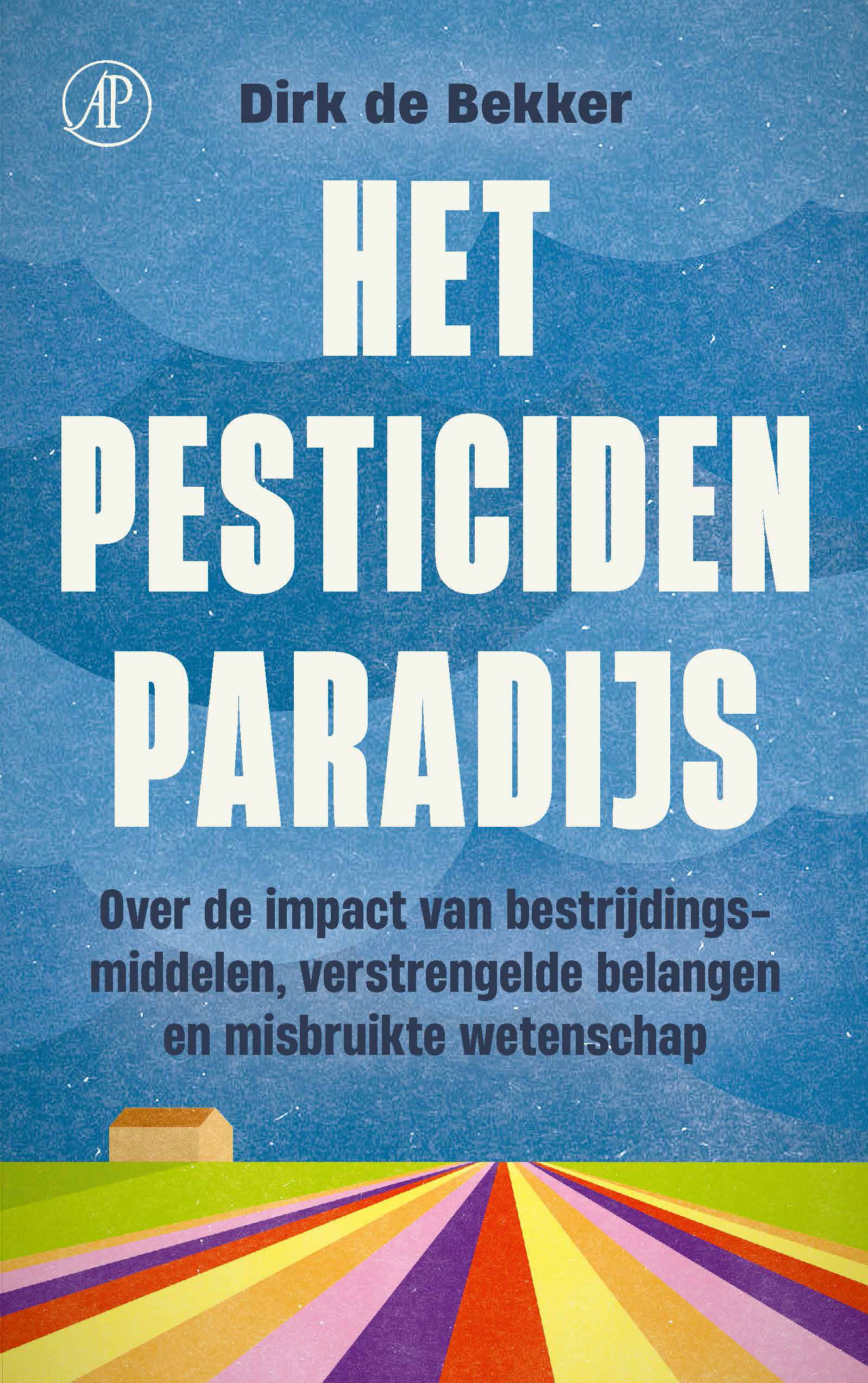
The cover of Dirk de Bekker’s book Het pesticidenparadijs (“Pesticide Paradise”).
“I recently had a woman with Parkinson’s at the outpatient clinic. She had just buried her husband, who also had Parkinson’s. In addition, six other people in her street had the disease. They live next to a field where small planes used to spray pesticides,” says Bloem.
Over the years that I have been publishing on pesticides, I have also regularly heard striking accounts from people with Parkinson’s who attribute their illness to pesticides. They mention having peeled bulbs for years, or working for the parks department with pesticide tanks on their backs and spray guns in their hands, or growing up on fruit farms where they played hide-and-seek in the orchards. I’ve also heard from people who have worked with pesticides for long periods of time in laboratories, in greenhouses, or on their own fields. Multiple members of a family are sometimes affected by the disease.
Puzzles and cocktails
The sheer frequency with which such personal anecdotes crop up is striking, although they prove nothing in themselves. But these stories do not stand alone.
A growing body of scientific studies shows that Parkinson’s disease occurs significantly more frequently among people living in areas of intensive cultivation. In France, for example, Parkinson’s is 8.5 per cent more common in the most intensive wine-growing regions compared to the national average.6 Consequently, the French government officially recognises Parkinson’s as an occupational disease among winegrowers.7 Studies in the United States and Canada, among other places, reveal the same pattern: in the examined regions, Parkinson’s disease is spread across the map like a patchwork quilt, and the areas with the most intensive farming practices – and the highest pesticide use – stand out most clearly in terms of the number of cases.8
It is virtually impossible to establish a definitive causal link in this type of “map-based study”. To do so would require a great deal of specific data: which substances were used, where and when? What is the residential history of the individuals who became sick in the area under investigation? What is their occupation? What did they eat? What is their genetic makeup? Are there other polluting activities in the area? The aim of such research is therefore not to establish or rule out an irrefutable causal link; it is about identifying a potential problem. In combination with other studies, the puzzle can then be pieced together more fully.
Although the scientific puzzle is not yet complete, the pieces that are already in place suggest that the explosive rise in Parkinson’s disease over the past decades can at least partly be attributed to exposure to pesticides. There is, for instance, a historical piece of the puzzle: the rapid post-war growth in Parkinson’s largely coincides with the period when pesticide use increased dramatically. In itself, this is not very convincing evidence, but together with the piece showing that the disease occurs more frequently in areas with intensive arable farming and high pesticide use, the picture changes. It becomes even clearer when you add the piece showing that farmers and gardeners in particular have a significantly increased risk of developing Parkinson’s.9
Therefore, contrary to what various agricultural organisations still regularly claim, the missing pieces of the puzzle do not so much lead to the question of whether a link exists, but rather to the question of exactly how strong that link is, and which specific substances are responsible. Scientists are also wondering whether there are substances that pose no risk individually, but can be dangerous in combination. This, in turn, raises other questions: what is the smartest way to investigate such “pesticide cocktails” without having to test an endless number of combinations? Are there genetic factors that increase the risk of harm following exposure to pesticides? Are there interactions between pesticides (or cocktails of pesticides) and other pollutants in the environment? And what is the situation with other neurodegenerative diseases, such as ALS and dementia, for which links to pesticides also exist?10
It has already been established that some specific pesticides, such as rotenone and paraquat, can damage the substantia nigra. This was not discovered during the official assessment of these pesticides but later in independent studies (and subsequently they were withdrawn from the European market). However, this type of research has not been carried out on the vast majority of substances, let alone for pesticide cocktails.
A recent large-scale study has found that trifluralin and tribufos, two pesticides frequently used in combination on cotton plantations in the United States, do not pose a proven risk for Parkinson’s when used individually. When used together, however, they prove to be highly damaging to dopamine-producing brain cells, suggesting that they can indeed cause Parkinson’s in combination.11 This highlights the importance of taking pesticide cocktails into account in the authorisation process, and placing this topic high on the research agendas of independent scientists in relation to both Parkinson’s and other conditions.
Lack of action
According to Bloem, the way the risk of Parkinson’s is handled in the authorisation procedure violates the precautionary principle. “Given all these clear links, should we say that we are only going to ban this rubbish once it has been irrefutably proven that they cause Parkinson’s? Or, with all the evidence that already exists, should we say that we are only going to re-authorise the substances once it has been proven that they are safe? In reality, what happens is the former, meaning the burden of proof has been reversed.”12
The way the risk of Parkinson’s is handled in the authorisation procedure violates the precautionary principle.
Bloem is not calling for an immediate ban on all pesticides. He does, however, advocate for subjecting the substances that are already authorised to a special Parkinson’s test as soon as possible. And as far as he is concerned, this should become standard practice when new pesticides are assessed. To this end, a testing procedure must be developed that makes it possible to look inside the brains of laboratory animals following prolonged exposure. There, it must be determined whether the substantia nigra has been damaged – for example, by counting the number of dopamine-producing cells. In the near future, it should be possible to carry out this procedure without subjecting animals to testing, by isolating the relevant cells outside their bodies.
The weedkiller glyphosate seems to be the most appropriate substance to first undergo testing for a link to Parkinson’s disease. It is by far the most widely used pesticide, and everyone is exposed to it to a greater or lesser extent. Moreover, several studies suggest a link between glyphosate and the development of Parkinson’s. The evidence, though far from conclusive, gives neurologists more than enough reason to be on alert.13 In addition, an increasing number of studies are emerging that show that even low doses of glyphosate can lead to disruptions in the gut flora.14 Such disruptions in the microbiome might – indirectly – increase the risk of Parkinson’s due to the communication between the gut and the brain. Researchers suspect that these disruptions could lead to a change in the structure of alpha-synuclein, a protein essential for communication between nerve cells. In mice, it has been established that this altered protein can reach the brain, where it subsequently damages the substantia nigra.15
Notably, the Dutch pesticide authority, the Ctgb, supported Bloem’s call for the speedy development of a Parkinson’s test. The November 2020 presentation was a wake-up call not only for the neurologist, but also for the Ctgb itself. This was evident in the fact that a few months later, in March 2021, the Ctgb wrote a letter to the agency responsible for pesticide risk assessment in the EU – the European Food Safety Authority, or EFSA – asking it to facilitate research into the development of an adequate testing procedure for Parkinson’s.16
The EFSA could not ignore this appeal by the Ctgb. Not only is it one of the leading national authorisation bodies with which the EFSA cooperates, but also, in its appeal, the Ctgb explicitly referred to Bloem – internationally renowned and known to frequently pop up in the international press to voice his concerns. Bloem’s message and extensive media reach have made many people in the pesticide world – from regulatory authorities to pesticide manufacturers – quite nervous.17
The EFSA responded just two weeks later with a proposal to organise a working conference “to take stock of the situation from a scientific and multidisciplinary point of view”.18 But over a year later, as I learned during my conversation at that time with Bloem at the Parkinson’s Centre of Expertise, that conference was yet to happen. Bloem could not contain his frustration. “How on earth do you explain to future generations – with a disease that is skyrocketing and an environmental role that seems so obvious – that we are not taking more decisive action?”
Breakthrough and disappointment
Six months later, however, on 8 September 2022, Bloem was again in high spirits. The conference that the neurologist had been pushing for over the past two years had finally taken place.19 In the presence of the EFSA and an international panel of experts, he was able to share his concerns about the authorisation procedure and Parkinson’s disease. And this had yielded results. All 49 attendees – experts affiliated with the EFSA as well as external research institutes and national authorisation bodies – reached an agreement. This is a rare occurrence among such a large group of international, often independent-minded experts. “There was broad consensus that the currently existing procedures […] offer an inadequate assessment of the risk of developing Parkinson’s disease in case of human exposure,” the minutes of the meeting state. The EFSA emphasised the urgent need to develop a new testing method that can actually provide insights into the risk of Parkinson’s. “A real breakthrough,” said Bloem. This was the first time that the EFSA had unconditionally acknowledged that the system it uses to assess pesticides was flawed.
The EFSA decided it would issue a call for tenders for a 3.5-million-euro contract aimed at the development of the required test. Specialised scientists were invited to submit bids.
The EFSA personally approached two Dutch research organisations with the request that they respond to this call: the Radboud University Medical Center (Bas Bloem’s employer) and RIVM, the National Institute for Public Health and the Environment. “That’s how strongly they felt about our case,” explained neurotoxicologist Harm Heusinkveld, who attended the conference on behalf of the RIVM. For years, toxicologists at the RIVM had also been worried about pesticides and Parkinson’s – concerns that were finally being taken seriously by the EFSA with this research call. ‘‘Afterwards, we thought: guys, something is really going to happen now.’’20
This sense of urgency and enthusiasm felt by many researchers was heightened by the fact that the European re-evaluation of glyphosate was taking place at the same time. If the EFSA call for tenders were to be released quickly, there might still be an opportunity to use the weedkiller as the first case for the Parkinson’s test under development, perhaps even before the reassessment of the pesticide was completed.
Seven long months passed before the EFSA finally sent out the official Parkinson’s tender on 9 April 2023. But when he read the text, Bas Bloem immediately realised that something was wrong. “At the meeting, everyone was in complete agreement: we need to develop a good new testing method for pesticides and Parkinson’s. And then I read the call, in which the EFSA has made no money whatsoever available for such a new testing method. It was as if that conference had never taken place.” He lets out an audible sigh over the phone. His voice, so enthusiastic after the conference, is now filled with disbelief. Neurotoxicologist Harm Heusinkveld reacted with the same astonishment: “This is a huge mystery. I really haven’t the faintest idea how they arrived at this.”
The original intention was to develop a comprehensive Parkinson’s test in one go, based on the substantia nigra. But the promise made earlier by the EFSA to issue a research brief for this purpose was not fulfilled. The research brief set out in the call specifically concerned the development of a testing method focused on the mitochondria, the cell’s energy powerhouses. “But that test already exists, so you’d just be rehashing the same thing all over again. Besides, that test is far too limited,” commented Heusinkveld.
The Radboud University Medical Center and the RIVM were so taken aback by the research mandate that landed in their inboxes that they sent a joint letter on 17 July to EFSA Director Bernhard Url to express their disappointment. It is particularly noteworthy that a third party signed on to their objection: the Ctgb.
It is unusual for the Ctgb to hold a view that is at odds with an opinion of the EFSA. These two authorities, one working at the national level and the other at the European level, cooperate closely within the same legal framework. The letter, which came into my possession during an investigation into glyphosate for De Groene Amsterdammer, offers a rare glimpse behind the scenes.
“Specifically, we were disappointed as to what the call envisioned to achieve, considering […] the broad agreement that an ambitious and novel approach was required,” the three parties wrote. “We had the clear impression from the workshop that the EFSA had decided to move forward, but the recent call solely repeats steps that had already been taken earlier. […] The resulting testing strategy will not provide full insight in the potential of chemical substances to induce or progress [Parkinson’s disease].” In conclusion, the RIVM, the Radboud University Medical Center and the Ctgb stated that, “despite the explicit question and encouragement” from the EFSA, they would not be competing for funding for the proposed research.
A contested report
Four months later, in July 2023, the EFSA announced its recommendation to renew the authorisation for glyphosate for the maximum period of 15 years. Bloem was stunned, and he was not the only one. Scientists all over the world criticised the EFSA’s decision in a reaction that was unusually vocal for the scientific community.
Although during previous glyphosate authorisations the debate revolved primarily around the risk of cancer, this time concerns about Parkinson’s dominated. Ecotoxicologist Peter Leendertse succinctly summarised the essence of the many scientific comments on the re-authorisation: “If there are so many questions surrounding a substance, surely you cannot approve it for the maximum term? Extend it by two years if there is no other option, and in the meantime, ensure that you get clarity on the risk of Parkinson’s disease.”21
In an effort to calm tensions, the European Commission ultimately decided to reduce the maximum term from 15 to 10 years. As far as critics were concerned, this was little more than a token gesture. They pointed out that not only independent studies but also the EFSA’s own assessment report provided sufficient grounds for revoking the license altogether.
The glyphosate report runs to a total of 6,354 pages. What is striking is the large number of “data gaps” that are mentioned. The EFSA generally uses this term to indicate that knowledge is lacking and further research is required. Data gaps can thus influence the decision to grant authorisation and the potential duration of that authorisation.
The EFSA identified data gaps regarding the effects of glyphosate on gut flora, biodiversity and groundwater, amongst other things. However, none of these were considered “critical concerns”. That determination already made many scientists raise their eyebrows – but what the report says regarding Parkinson’s led to even greater surprise. There is no mention of a data gap anywhere in the passages on Parkinson’s disease, giving the impression that there is no lack of information on this topic whatsoever. On the contrary, the report’s conclusion is that current evidence “does not trigger a concern for parkinsonism”.22
Although the EFSA acknowledged that risks of Parkinson’s could not be ruled out under the current authorisation procedure, the agency chose to ignore this conclusion in its glyphosate report.
“Absurd”, said ecotoxicologist Peter Leendertse. “Of course there is a huge data gap when it comes to Parkinson’s. Surely the report should mention that no reliable testing procedure exists. The findings of that conference are now simply being swept under the carpet.”
In short, although the EFSA itself acknowledged at the September 2022 conference that risks of Parkinson’s could not be ruled out under the current authorisation procedure, the agency chose to completely ignore this conclusion in its glyphosate report published the following summer.
The minutes of the September 2022 conference (which I obtained shortly afterwards) proving that the EFSA knows (and acknowledges) that a good Parkinson’s test does not exist have never been officially released. This is highly unusual – a considerable amount of information from comparable EFSA conferences is publicly available, ranging from advance announcements, participant names and meeting transcripts to complete video recordings. It is as if the much-heralded meeting in the late summer of 2022, attended by 49 international experts, including six EFSA staff members, never took place; as if the unequivocal conclusion regarding Parkinson’s was never reached.
Three EFSA staff members who attended the conference were also directly involved in the reassessment of glyphosate. Therefore, the assessors had first-hand knowledge of the discussions held during the conference regarding Parkinson’s disease and the lack of a sufficient test. Nevertheless, they did not include any of this in the dossier when the neurotoxicity of glyphosate was re-examined.
What makes the course of events even more peculiar is that during the re-assessment of glyphosate, the EFSA worked closely with the Ctgb. Alongside the national pesticide authorities of Hungary, Sweden and France, the Dutch authority was one of the responsible parties to which the assessment work had been outsourced. In other words, the Ctgb itself played a leading role in the decision to extend the authorisation for glyphosate for the maximum period. This is difficult to reconcile with the critical letters it sent to the EFSA during the same period: the first, dated 9 March 2022, requesting that EFSA Director Bernhard Url make room for research into a testing procedure for Parkinson’s disease, and a joint letter with the RIVM and Bas Bloem on 17 July 2023 complaining that the EFSA had broken its promise to make funds available for a Parkinson’s test.
It is as if there were two completely different Ctgb bodies. Whilst one was sending critical letters to the EFSA regarding Parkinson’s, the other was assisting the EFSA with the re-authorisation of glyphosate without raising any critical objections to the fact that the substance has not been tested for a link to Parkinson’s – even though such testing might be more urgent for glyphosate than for any other European-authorised pesticide.
The missing test
In a formal response to my questions, the Ctgb stated that a “very extensive data package” was available during the re-evaluation of glyphosate, containing “many more studies than merely the required ones”, including epidemiological research. While there may not be an adequate test to rule out Parkinson’s, said the Ctgb, the assessors decided that there was no cause for concern after studying a great deal of other supplementary information. “That is something different from being able to establish this with scientific certainty,” the Ctgb concluded.
The EFSA in turn denies that the conclusion regarding Parkinson’s disease reached at the conference has ever been its official position. The meeting was “merely informative” and should only be seen as “preparatory exchanges” for subsequent future tenders, the agency informed me shortly after the publication of the glyphosate report. EFSA also stressed that the assessment of glyphosate was carried out entirely “in line with the current legal framework”.
When I published the outcomes of the conference in De Groene Amsterdammer in September 2023, I received an angry email from the EFSA. The September 2022 meeting had not been a real “conference” at all, the message said, but merely a “procurement meeting”. And the outcomes of that meeting, the EFSA communications department emphasised once again, in no way represented the official position of the EFSA. “It’s a pity,” the email concluded, “[that you] decided to provide an angle which does not factually represent reality”.
This reaction did not surprise me. By making information from the meeting minutes and the Ctgb’s letter to the EFSA public through my publication, the European pesticide authority was left exposed. After all, these documents prove that what the EFSA publicly states about Parkinson’s disease does not correspond with its own behind-the-scenes views on the matter.
What the EFSA publicly states about Parkinson’s disease does not correspond with its own behind-the-scenes views on the matter
The fact that the EFSA has neither publicly disclosed the conference’s conclusions nor included them in its assessment of glyphosate is, I suspect, essentially a legal strategy. If, following the conference, the EFSA had officially acknowledged that there is a gaping hole in the authorisation system, this would have provided the necessary ammunition for parties seeking to obstruct pesticide use. Invoking the precautionary principle in court is much easier if the shortcomings of the authorisation procedure regarding Parkinson’s disease are officially documented by EFSA itself. In that case, EFSA would be admitting that the risk of Parkinson’s disease “cannot be determined with sufficient certainty”, one of the basic conditions for invoking the precautionary principle.23
Due to the lack of a Parkinson’s test, the risk of the disease cannot be completely ruled out in connection with any authorised pesticide. Officially acknowledging this on the record could throw the authorisation system – and with it the entire pesticide industry and the world of agriculture – into chaos. This would also happen if the EFSA were to officially acknowledge that the pesticide models it uses were not developed in a neutral manner.24
When Bloem and the Ctgb sat down together in November 2020, both the neurologist and the pesticide authority realised that the authorisation procedure was flawed with respect to Parkinson’s. Three to five years: that would be the time needed to develop an adequate testing protocol, thought Bloem. “I think we need to do this together as soon as possible,” confirmed the then director of the Ctgb, Ingrid Becks-Vermeer, emphasising the need for a Parkinson’s test when I questioned her in 2022. She envisioned a development process lasting “a number of years”.25
More than five years have passed since Bloem’s meeting with the Ctgb, and the EFSA conference took place three and a half years ago. The authorisation system still does not include a Parkinson’s test. Legally speaking, the EFSA may be able to defend this situation. The question, however, is how long they can keep up their defence in a society increasingly confronted with Parkinson’s disease.
This article is a lightly edited translation from Het pesticidenparadijs (“Pesticide Paradise”), an investigative book by Dirk de Bekker on the hidden world of pesticides, published by De Arbeiderspers in the Netherlands in January 2026.
- Over the past few years, I have interviewed Bas Bloem on several occasions. Parts of these interviews have previously appeared in publications such as the podcast Red de Lente and the Dutch periodical De Groene Amsterdammer. See for example: De Bekker, D., et al. (24 January 2023). “Parkinson en pesticiden” [Parkinson’s and pesticides]. Red de Lente, season 2, episode 3. De Bekker, D. (25 September 2023). “De gezondheidsrisico’s van glyfosaat” [The health risks of glyphosate]. De Groene Amsterdammer. In this text, I draw on all the conversations held. Where necessary, I mention the date on which these conversations took place in the main text. ↩︎
- Van der Gaag, B.L., Hepp, D.H., Hoff, J.I., Van Hilten, J.J., Darweesh, S.K.L., Bloem, B.R., and Van den Berg, W.D.J. (8 September 2023). “Risicofactoren voor de ziekte van Parkinson” [Risk factors for Parkinson’s disease]. Nederlands Tijdschrift voor Geneeskunde, 167. ↩︎
- Su, D., Cui, Y., He, C., Yin, P., Bai, R., Zhu, J., Lam, J.S.T., Zhang, J., Yan, R., Zheng, X., Wu, J., Zhao, D., Wang, A., Zhou, M., and Feng, T. (2025). “Projections for prevalence of Parkinson’s disease and its driving factors in 195 countries and territories to 2050. Modelling study of Global Burden of Disease Study 2021.” BMJ, 388e080952. ↩︎
- See for example: Bloem, B.R., Hoff, J., Sherer, T., Okun, M.S., Dorsey, R. (2021). “De parkinsonpandemie: Een recept voor actie” [The Parkinson’s pandemic: a call to action]. Poiesz Publishers. ↩︎
- Opten, N., Wildenborg, F., Bolwerk, P. (2023). ‘Hoe het gifspook door de Betuwe waart. “Aan hun manier van lopen kun je zien dat ze het ook hebben.”’ [‘How the poison spectre haunts the Betuwe: “You can tell by the way they walk that they have it too.”’]. De Gelderlander. 3 November.
Folkerts, N. (23 July 2025). “Bestrijdingsmiddelen zorgen voor onrust in Drentse dorpen: ‘Op één dag zag ik vijf patiënten met parkinson’” [“Pesticides cause unrest in Drenthe villages: ‘In one day I saw five patients with Parkinson’s.’’]. Trouw. ↩︎ - Kab, S., Spinosi, J., Chaperon, L., Dugravot, A., Singh-Manoux, A., Moisan, F., and Elbaz, A. (2017). “Agricultural activities and the incidence of Parkinson’s Disease in the general French population”. European Journal of Epidemiology, 32(3), pp. 203-216. ↩︎
- Within the EU, in addition to France, Italy – and more recently Germany – also recognise Parkinson’s as an occupational disease. ↩︎
- Barbeau, A., Roy, M., Bernier, G., Campanella, G., and Paris, S. (1987). “Ecogenetics of Parkinson’s Disease. Prevalence and environmental aspects in rural areas”. Canadian Journal of Neurological Sciences/Journal Canadien des Sciences Neurologiques, 14(1), pp. 36-41.
Hugh-Jones, M.E., Peele, R.H., and Wilson, V.L. (2020). “Parkinson’s Disease in Louisiana, 1999-2012. Based on hospital primary discharge diagnoses, incidence, and risk in relation to local agricultural crops, pesticides, and aquifer recharge”. International Journal of Environmental Research and Public Health, 17(5), 1584.
Li, S., Ritz, B., Gong, Y., Cockburn, M., Folle, A.D., Del Rosario, I., Yu, Y., Zhang, K., Castro, E., Keener, A.M., Bronstein, J., and Paul, K.C. (2023). “Proximity to residential and workplace pesticides application and the risk of progression of Parkinson’s diseases in Central California”. The Science of the Total Environment, 864, 160851.
After Het pesticidenparadijs was published,a Dutch study appeared showing regional clustering of Parkinson’s in the Netherlands, but no clear overlap with intensive arable farming areas was found. Although pesticide use and exposure were not taken into account, the authors suggested that the Dutch regional disparities “are not readily explained by known environmental indicators, warranting further investigation”. See: Simões, M., Peters, S., Huss, A., Darweesh, S. K., Bloem, B. R., & Vermeulen, R. (2026). “Incidence and spatial variation of Parkinson’s disease in the Netherlands (2017–2022): a population-based study”. The Lancet Regional Health – Europe, 62, 101565. ↩︎ - Elbaz, A., Clavel, J., Rathouz, P.J., Moisan, F., Galanaud, J., Delemotte, B., Alpérovitch, A., and Tzourio, C. (2009). “Professional exposure to pesticides and Parkinson Disease”. Annals of Neurology, 66(4), pp. 494-504. ↩︎
- See for example: Meerman, J.J., Wolterink, G., Hessel, E.V., De Jong, E., and Heusinkveld, H.J. (2022). “Neurodegeneration in a regulatory context: The need for speed”. Current Opinion in Toxicology, 33, 100383. ↩︎
- Paul, K.C., Krolewski, R.C., Moreno, E.L., Blank, J., Holton, K.M., Ahfeldt, T., Furlong, M., Yu, Y., Cockburn, M., Thompson, L.K., Kreymerman, A., Ricci-Blair, E.M., Li, Y.J., Patel, H.B., Lee, R.T., Bronstein, J., Rubin, L.L., Khurana, V., and Ritz, B. (2023). “A pesticide and ipsc dopaminergic neuron screen identifies and classifies Parkinson-relevant pesticides”. Nature Communications, 14(2803). ↩︎
- For more background information on this ruling, see: Darweesh, S.K.L., Vermeulen, R.C.H., and Bloem, B.R. (2024). “Paraquat and Parkinson’s Disease. Has the burden of proof shifted?”. International Journal of Epidemiology, 53(5). ↩︎
- See for example: Bloem, B.R., and Boonstra, T.A. (2023). “The inadequacy of current pesticide regulations for protecting brain health. The case of glyphosate and Parkinson’s Disease”. The Lancet Planetary Health, 7(12), pp. e948-e949. ↩︎
- Lehman, P.C., Cady, N., Ghimire, S., Shahi, S.K., Shrode, R.L., Lehmler, H., and Mangalam, A.K. (2023). “Low-dose glyphosate exposure alters gut microbiota composition and modulates gut homeostasis”. Environmental Toxicology and Pharmacology, 100, 104149.
Matsuzaki, R., Gunnigle, E., Geissen, V., Clarke, G., Nagpal, J., and Cryan, J.F. (2023). “Pesticide exposure and the microbiota-gut-brain axis”. The ISME Journal, 17(8), pp. 1153-1166.
Puigbò, P., Leino, L.I., Rainio, M.J., Saikkonen, K., Saloniemi, I., and Helander, M. (2022). “Does glyphosate affect the human microbiota?”. Life, 12(5). ↩︎ - Singh, Y., Trautwein, C., Romani, J., Salker, M.S., Neckel, P.H., Fraccaroli, I., Abeditashi, M., Woerner, N., Admard, J., Dhariwal, A., Dueholm, M.K.D., Schäfer, K., Lang, F., Otzen, D.E., Lashuel, H.A., Riess, O., and Casadei, N. (2023). “Overexpression of human alpha-Synuclein leads to dysregulated microbiome/metabolites with ageing in a rat model of Parkinson disease”. Molecular Neurodegeneration, 18(1).
Silva, B.A., Breydo, L., Fink, A.L., and Uversky, V.N. (2012). “Agrochemicals, a-Synuclein, and Parkinson’s Disease”. Molecular Neurobiology, 47(2), pp. 598-612.
Uversky, V.N., Li, J., Bower, K., and Fink, A.L. (2002). “Synergistic effects of pesticides and metals on the fibrillation of a-Synuclein. Implications for Parkinson’s Disease”. NeuroToxicology, 23(4-5), pp. 527-536. ↩︎ - De Leeuw, J.F. (9 March 2021). Subject: possible relation between the use of specific pesticides and the development of Parkinson’s Disease. Ctgb, reference number 202103090024. ↩︎
- See for example: Brzeziński, B. (2025). “Parkinson’s is a man-made disease”. Politico. 14 April. Bloem, B., Boonstra, T. (11 October 2023). “Glyphosate: ‘En tant que médecins spécialistes des maladies neurodégénératives, nous avons trois conseils à donner au ministre de l’agriculture Marc Fesneau’” [“Glyphosate: ‘As doctors specialising in neurodegenerative diseases, we have three pieces of advice for the Minister for Agriculture, Marc Fesneau’”]. Le Monde. ↩︎
- Url, B. (n.d.). Subject/Re.: Possible relation between the use of specific pesticides and the development of Parkinson’s Disease. EFSA, Ref. ic2021-24570142. Although the letter is undated, the upload date provided by the Ctgb (23 March 2021) suggests that it was probably received two weeks later (and in any case no later than that). ↩︎
- The following reconstruction is partly a reworking of my earlier research article in De Groene Amsterdammer, which was published on 25 September 2023. ↩︎
- Quote from: De Bekker, D. (25 September 2023). “The health risks of glyphosate”. De Groene Amsterdammer. ↩︎
- Ibid. ↩︎
- Álvarez, F., et al. (2023). “Peer review of the pesticide risk assessment of the active substance glyphosate”. EFSA Journal, 21(7), paragraph 9. EFSA. (July 2023). Peer Review Report on Glyphosate, Part 3 of 6, p. 163. ↩︎
- Commission Communication on the precautionary principle (2 February 2000), Document 52000dC0001, p. 3. ↩︎
- Elsewhere in the book, I write about the pesticide models that are currently in use to calculate the distribution of pesticides through the environment. I conclude that these models, which form the basis of the authorisation system, were developed in close cooperation with the pesticide industry. ↩︎
- Quoted from: De Bekker, D., et al. (5 June 2022). “The director of the Ctgb responds”. Red de Lente, season 1, episode 8. ↩︎