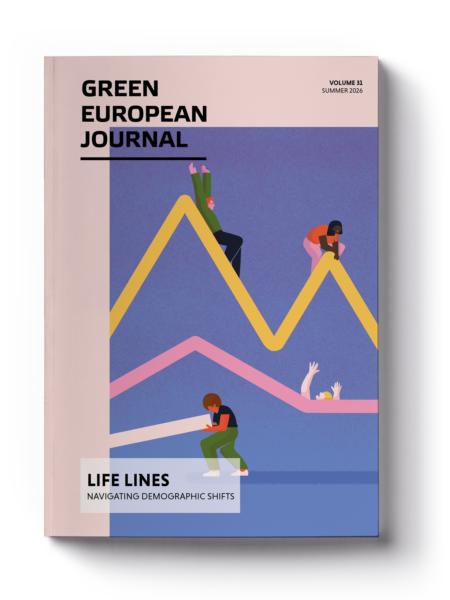
The tension between electoral cycles and long-term thinking has long preoccupied political philosophers. While experiments in institutional design have been underway at the national level for some time, the EU has recently embarked on its own path towards intergenerational fairness. Can a commitment to the future expand democratic possibilities rather than shrink them?
On 4 March 2026, the European Commission published the Strategy on Intergenerational Fairness, the first ever comprehensive political framework at the European level to engage systematically with the fair distribution of opportunities and burdens across generations. Led by Glenn Micallef, the first European Commissioner for Intergenerational Fairness, Youth, Culture and Sport, the initiative also involved a citizens’ panel comprising 150 randomly selected Europeans from all member states.
The significance of this strategy should not be underestimated: in European governance, strategy documents often serve as springboards for subsequent legislation and programmes. They shape discourse, set priorities, and lend structure to the political process.
Intergenerational fairness, as a concept, asks whether the decisions on policies such as climate, public debt, natural resources, and social security taken by those alive today distribute opportunities and burdens justly across generations or secure advantages for the present at the expense of those who will inherit the consequences. Via this route, it could come to shape future decision-making across the EU.
That the EU is engaging with intergenerational fairness as a guiding political principle is, in itself, a significant development. But does the strategy adequately reckon with the structural roots of the problem it seeks to address – democracy’s inherent bias towards the short-term?
The origins of an idea
Intergenerational fairness is pursued as a normative goal for a range of reasons – predominantly moral but also psychological and relational.
According to American political philosopher John Rawls, each generation should adopt principles they would want preceding generations to have followed, no matter how far back in time.1
From a universalist perspective, it is unjust for one generation to consume resources or cause harm that future generations must bear, because moral duties extend to all persons regardless of when they are alive. If we accept that we should treat future people as moral equals, then obligations of fairness between generations follow as a matter of course.
As for the relational and psychological foundations of intergenerational fairness, American philosopher Samuel Scheffler has shown that our identities extend beyond our individual lifetimes: we care about the future because our sense of meaning is bound up with projects, communities, and relationships that outlast us.2 If we contribute to a long-term endeavour through scientific research, institutional reform, or cultural preservation, we do so for people we will never meet, because the significance of our own lives depends on the continued existence of a world that values what we have valued.
Australian philosopher John Passmore’s earlier theorisation of a “chain of love” is complementary. According to this principle, each generation cares for its own children for personal and dynastic reasons, creating a cascading chain of concern that reaches forward across time.3
Indigenous knowledge traditions have long articulated similar beliefs, such as the Seventh Generation principle, which holds that decisions should be evaluated in light of their consequences seven generations hence. More recently, the Future Design research programme led by Japanese economist Tatsuyoshi Saijo has explored how imagining the lives of future people through story telling, deliberative exercises, and practices can strengthen a form of “time-spanning empathy”.
These different theories and ideas converge on the same fundamental claim that justice does not stop at the boundaries of the present.
By focusing specifically on the fair distribution of opportunities, resources, and burdens between successive generations, intergenerational fairness differs from intragenerational fairness, which concerns inequalities among contemporaries, whether these arise from wealth, social class, gender, ethnicity, or geography. These two dimensions of justice interact – since structural disadvantages within a generation can compound across generations – but they remain distinct. In this sense, intergenerational fairness is not a wild card that can be played for any and every concern about social justice.
These different theories and ideas converge on the same fundamental claim that justice does not stop at the boundaries of the present.
Trapped in the present
The plural foundations of intergenerational fairness and the breadth of the intellectual consensus behind it contribute to its political force as an idea. But why, then, has it proven so difficult to translate it into political reality?
The answer lies in a structural deficiency of democratic governance that has been widely discussed in recent years: presentism.
Presentism is not the same as shorttermism; not every short-term action is a form of myopia. In a public health emergency, for instance, deficit spending to protect lives in the present is not only justified but imperative – even if it increases the fiscal burden on future generations. Meanwhile, in constitution-making, too rigid a long-term orientation can itself be intergenerationally unjust, entrenching past preferences at the expense of a future generation’s right to self-determination. What presentism designates is rather the systematic tendency of democratic institutions to privilege the interests of those currently alive at the expense of future citizens. This tendency is not exclusive to democracies. Authoritarian regimes typically display even less concern for futureoriented interests, given their patronage and the absence of accountability. But it is in democracies that the problem is most amenable to structural reform.
The roots of presentism are both electoral and cognitive. Voters, for reasons that are not entirely irrational, tend to favour policies whose benefits materialise in the present or near future and whose costs are deferred. After all, it is not unreasonable to prioritise the tangible over the speculative.
Current demographic trends intensify this dynamic: empirical research has found that with each year of ageing, the odds of supporting increases in child benefits – that is, investment in the next generation – decrease by approximately 4 per cent. Childless elderly people, in particular, are roughly half as likely as parents to support such measures.4 One must therefore be cautious about equating more direct democracy, particularly in ageing societies, with less presentism.
Politicians, for their part, operate under the structural pressures of the electoral cycle. Even those who are genuinely committed to long-term outcomes must first win and retain office, and the only way to do so is by catering to the preferences of the current electorate. Political competitions between a candidate promising near-term benefits and one pledging the same benefits in the more distant future do not end up favouring the latter. As John Stuart Mill observed in 1861, “Rulers and ruling classes are under a necessity of considering the interests of those who have the suffrage, but of those who are excluded, it is in their option whether they will do so or not.”5
This dynamic breaches the “all-affected principle” central to democratic theory: the idea that all those affected by a decision should have a say in its making. The decisions on climate policy, fiscal strategy, and resource stewardship of citizens alive today profoundly shape the living conditions of people not yet born, who have no voice in the political process, as they cannot vote, petition, protest, or organise. As German philosopher Hans Jonas wrote, “The nonexistent has no lobby, and the unborn are powerless.”6
This representation gap is different from the exclusion typically experienced by already existing and marginalised social groups such as women, immigrants, and ethnic minorities, who are present in the here and now and can, in many cases, exert political pressure. Future generations are invisible and unidentifiable.
The roots of presentism are both electoral and cognitive. Voters tend to favour policies whose benefits materialise in the present or near future.
The future branch
The consequences of presentism are most acute in the environmental domain. Scientists refer to our geological epoch as the Anthropocene because the effects of human action on ecosystems reach into the future on timescales that were unimaginable during the Holocene, when our political institutions were designed. Climate change, species extinction, radioactive contamination, the depletion of fossil energy resources, and the accumulation of space debris all involve temporal scales measured in thousands or millions of years. Yet voters and politicians alike keep making decisions that focus narrowly on the present or the near future.
With this in mind, we should not think of the Anthropocene as merely another analytical frame but rather as a wake-up call to reform democracy.
These insights have generated a growing interest in institutional innovation, leading to the creation of offices for future generations (OFGs), tasked with introducing the interests of future citizens into today’s political system. These offices aim to initiate a paradigm shift from a three- to a fourbranch model of government, supplementing the classical legislative, executive, and judicial pillars with a dedicated “future branch”.
Pioneering experiments include Finland’s Committee for the Future, the Commissioner for Future Generations in Israel (2001–2006), the Ombudsman for Future Generations in Hungary (2008–2011), and the Future Generations Commissioner in Wales. There is evidence that such institutions are most democratically legitimate when they possess the right to initiate legislation rather than just delay or veto it. They should be proposers, not preventers, ensuring that long-term concerns are aired at the earliest stage of the policy cycle without adding an extra step to already complex legislation processes.
Strengths and missed opportunities
By articulating intergenerational fairness as a cross-cutting political principle at the European level, the European Commission recognises that political decisions carry long-term consequences, and that democratic systems need institutional mechanisms to reckon with those effects. Its diagnosis of presentism is compelling, and its ambition to mainstream intergenerational thinking across policy domains, as it has already done with gender, reflects a sound understanding that the consequences of presentism manifest in many arenas.
We should not think of the Anthropocene as merely another analytical frame but rather as a wake-up call to reform democracy.
Concrete proposals such as the Intergenerational Fairness Index could become valuable instruments for tracking long-term trends and furnishing political debate with empirical substance. The choice of 16 November as a day marking intergenerational fairness, originating in civil society advocacy, signals receptiveness to civic impulses. The strategy also draws on existing national initiatives, including Finland’s Committee for the Future, Spain’s National Office of Foresight and Strategy, and Malta’s Guardian of Future Generations, demonstrating awareness of the institutional landscape.
Yet it also has significant shortcomings.
The most conspicuous deficiency is institutional. The citizens’ panel had called for the establishment of an independent Council for Intergenerational Fairness at the EU level, comprising a scientific expert panel and an assembly of randomly selected members of the public. This body would have given permanent institutional expression to the interests of future generations within the EU’s decision-making architecture. Yet the strategy did not take up this recommendation, nor does it address the panel’s recommendation to lower the voting age to 16 as a means of strengthening the political voice of younger generations.
Instead, the Commission opted for a gradualist approach, integrating long-term perspectives into existing processes without creating new institutions. But if democratic institutions are structurally predisposed towards discounting the future, then the corrective cannot consist solely of exhortations to those same institutions to think more long-term. The strategy’s own diagnosis undermines the proposed remedy.
A second concern is conceptual. The Commission’s focus on fair places (alongside fair policymaking and fair opportunities) aims to ensure intergenerational fairness across territories. However, it reveals a tendency to stretch the concept of intergenerational fairness beyond its analytical bounds. Regional inequality, addressing disparities in access to education, infrastructure, and employment between urban and rural areas, or between economically strong and structurally disadvantaged regions, is a pressing concern. But it is primarily a question of intragenerational justice because it pertains to differences between contemporaries distinguished by geography, not by their position in time. In Germany, for instance, the enduring inequalities between West and East are profound, yet calls for enhanced inter-state fiscal equalisation are not strictly a matter of intergenerational fairness. If it sacrifices analytical precision in the name of political breadth, the strategy risks diluting its effectiveness. The power of intergenerational fairness derives precisely from its specificity.
A third limitation pertains to fiscal policy. Long before the environmental crisis entered the discourse, public debt was already a central concern of intergenerational justice debates, including for US founding father Thomas Jefferson. Yet the strategy accords this dimension only marginal attention. This is a missed opportunity, not least because the EU’s own treaties acknowledge the importance of balancing revenue and expenditure in the EU budget and directing EU spending overwhelmingly towards investment.
Finally, the strategy’s reliance on soft instruments such as strategic foresight, impact assessments, public consultations, and an AI-enabled “Futures Balance Tool” raises questions about its ability to exert real influence on policymaking. Such instruments already exist at the European level, but their impact has remained limited. The mainstreaming approach places heavy demands on institutional coordination, and when a guiding principle is to be embedded across a multitude of policy fields, there is a risk that responsibilities become diffuse and the agenda is reduced to rhetorical aspirations. While the strategy lays important foundations for intergenerational fairness, the real test of its worth begins now.
A fiscal conservative and a climate activist will draw very different conclusions about what future generations need.
The politics of the long term
There is, however, a deeper question that no strategy document can resolve on its own, and which advocates of intergenerational fairness, ourselves included, must confront honestly.
Intergenerational fairness is a powerful idea, but it is not a cure-all. As we have argued, the concept itself derives its force precisely from its focus on the distribution of opportunities and burdens between successive generations and not every dimension of social inequality. Losing sight of such specificity can put the concept at risk of becoming politically instrumentalised.
The language of future generations can be mobilised to expand political possibilities but also to constrain them. Austerity programmes have been justified in the name of fiscal responsibility towards those who come after, even as they deepened inequality and eroded public services for those alive today. And in some context, appeals to long-term sustainability have been used to resist redistributive claims made by people who are suffering now. When this happens, intergenerational fairness ceases to be a tool for justice and becomes a device for deferring it.
This risk is compounded by the fact that future generations, precisely because they do not yet exist, cannot speak for themselves. Their interests must be interpreted and are inevitably shaped by the political commitments of those doing the interpreting. A fiscal conservative and a climate activist will draw very different conclusions about what future generations need. Future generations can be pulled in whichever direction present-day politics requires, which is why the institutional design matters so much. The question of who speaks on behalf of the unborn is not a technocratic matter but a deeply political one.
The challenge, then, is to ensure that intergenerational fairness expands the horizon of democratic politics rather than narrowing it. This means resisting the temptation to treat the concept as a trump card that overrides democratic deliberation in the present. It means insisting that obligations to future generations do not come at the expense of obligations to those who are marginalised today.
These tensions cannot be resolved by any single strategy, however well intentioned. They must be collectively negotiated, debated, and revisited – which is to say, they must be kept within the domain of democratic politics. The EU’s strategy is a valuable opening move, but the conversation it sparks will need to be more searching, more self-critical, and more willing to engage with the uncomfortable question of whose future is being secured and at whose expense.
- John Rawls (2001). Justice as Fairness: A Restatement. Cambridge, MA: Harvard University Press ↩︎
- Samuel Scheffler (2013). Death and the Afterlife. Oxford: Oxford University Press. ↩︎
- John Passmore (1974). Man’s Responsibility for Nature: Ecological Problems and Western Traditions. New York: Scribner. ↩︎
- Jörg Tremmel (ed.) (2008). Demographic Change and Intergenerational Justice: The Implementation of Long-Term Thinking in the Political Decision Making Process. Berlin: Springer ↩︎
- John Stuart Mill (1861). Considerations on Representative Government. London: Parker, Son, and Bourn. ↩︎
- Hans Jonas (1984). The Imperative of Responsibility: In Search of an Ethics for the Technological Age. Chicago: The University of Chicago Press. ↩︎